Gusher 30 Bilge Pump New Handwheel

Gusher 30 Bilge Pump New Handwheel

  • ActionTo Do List item B0200 – Obtain spare Whale AK3051 service kit for Gusher 30 bilge pump. ($66.99)
  • Action: To Do List item B0201 – Obtain Whale Gusher 30 bilge pump AS3016 Handwheel & Stud Kit and install missing handwheel. ($48.09)
  • Completed: 18 October 2017
  • Cost: $115.08


On 23 May 2017 ordered a Whale Water Pump AK3051 Service Kit for the Whale Gusher 30 bilge pump from the Defender's website at a cost of $66.99. This item was shipped to our balikbayan box consolidator and forwarder Manila Forwarder in Los Angles, California and received there on 30 May 2017. We received this item in Naga City, Cebu on 17 August 2017.

    On 13 May 2017 ordered a Whale Gusher 30 bilge pump AS3016 Handwheel & Stud Kit for the Whale Gusher 30 bilge pump from the Seamark Nunn, a United Kingdom website at a cost of $48.09 - $31.40 for the kit with additional $16.69 for shipping from England to California. This item was shipped to our balikbayan box consolidator and forwarder Manila Forwarder in Los Angles, California and received there on 22 May 2017. We received this item in Naga City, Cebu on 17 August 2017.

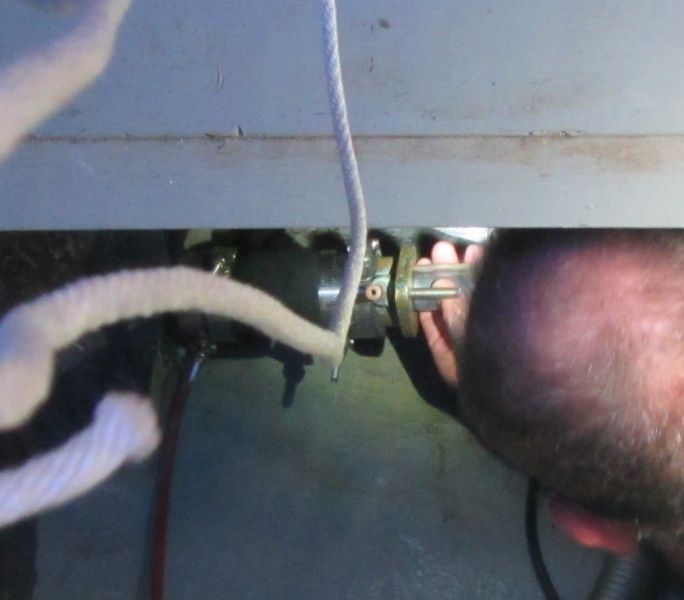
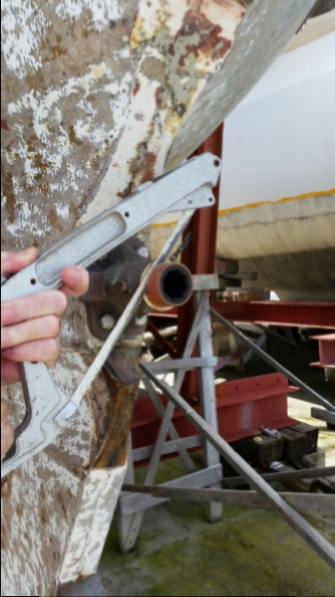
      On 18 October 2017 we installed one handwheel on the Whale Gusher 30 bilge pump to replace the steel nut. The remaining items were placed into the ship's spares.

      Stuffing Box

      Stuffing Box

      • Action: To Do List item A0097 – Obtain roll of stuffing box 1/4 inch packing gland material.
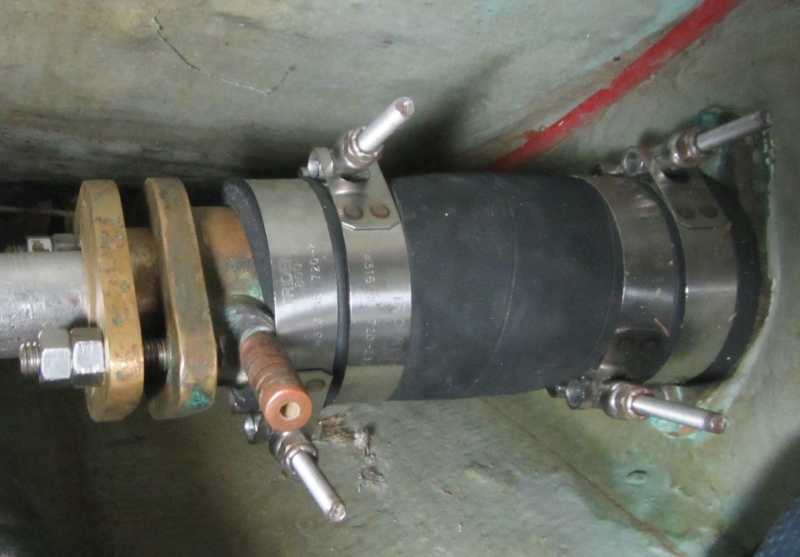
      • Action: To Do List item A0098 – Obtain two (one spare) and install rated and approved stuffing box robust replacement flexible hose with four 316 stainless steel clamps.
      • Completed:  16 October 2017
      • Cost: $99.09


      Selected and ordered WPT Graphtex Ultra (GTU) Flax Shaft Packing, 1/4-inch thick ($15.99), for the stuffing box packing gland material.  Had previously ordered and received GTU 5/16-inch thick ($19.99) packing gland which is kept as a spare.

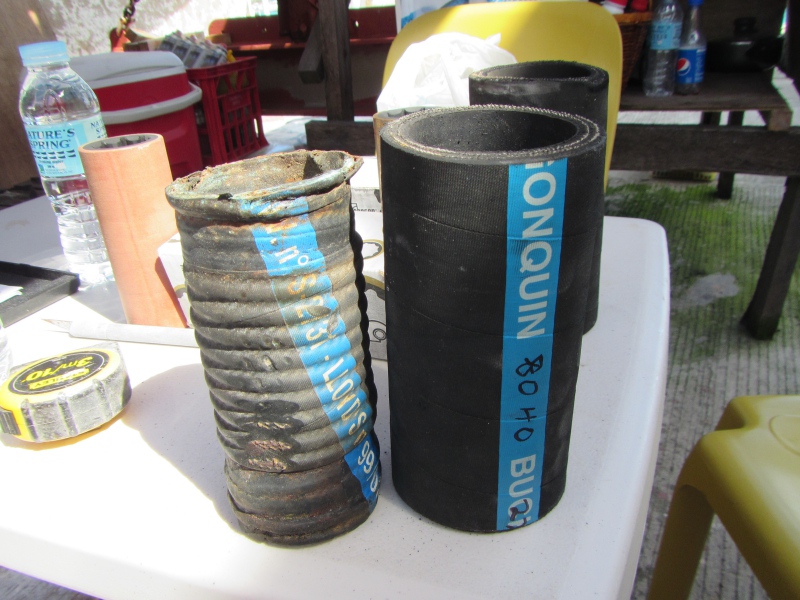
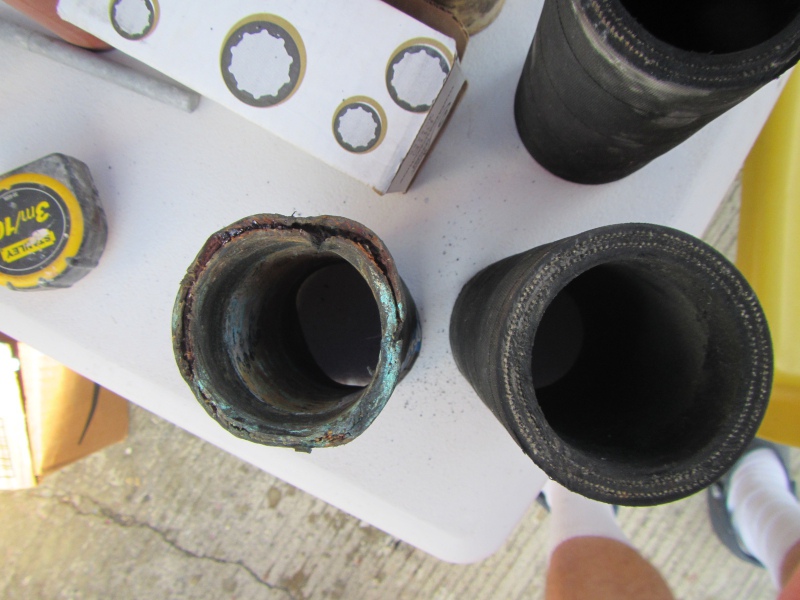
      The hose selected for the stuffing box was Buck Algonquin 2.25-inch, five-ply construction, heavy duty hose ($32.99) which came in a 12-inch length - enough to make two stuffing box hoses. This hose is specifically designed for stuffing box use and the reinforcing material used inside the hose is fiber, not metal, which could eventually rust and degrade the hose.  Four Trident 720 Series T-Bolt Exhaust Hose Clamps ($30.12) were also obtained.

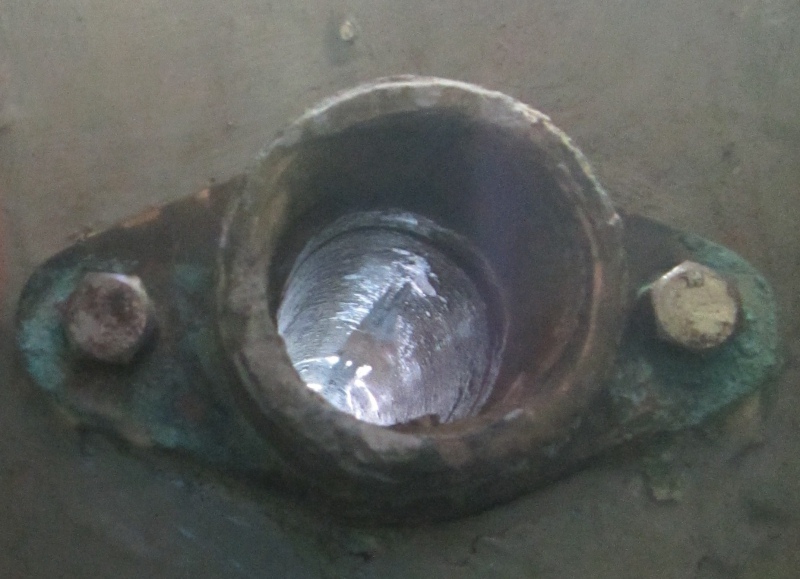
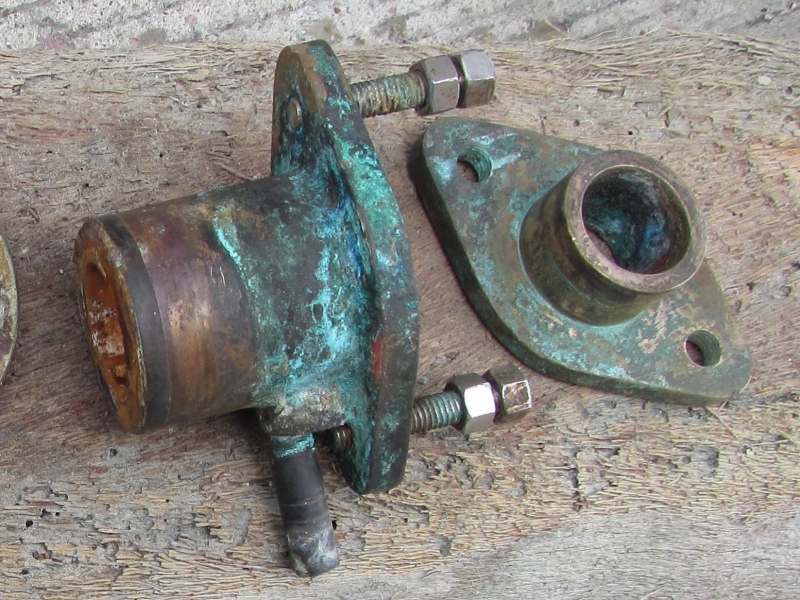
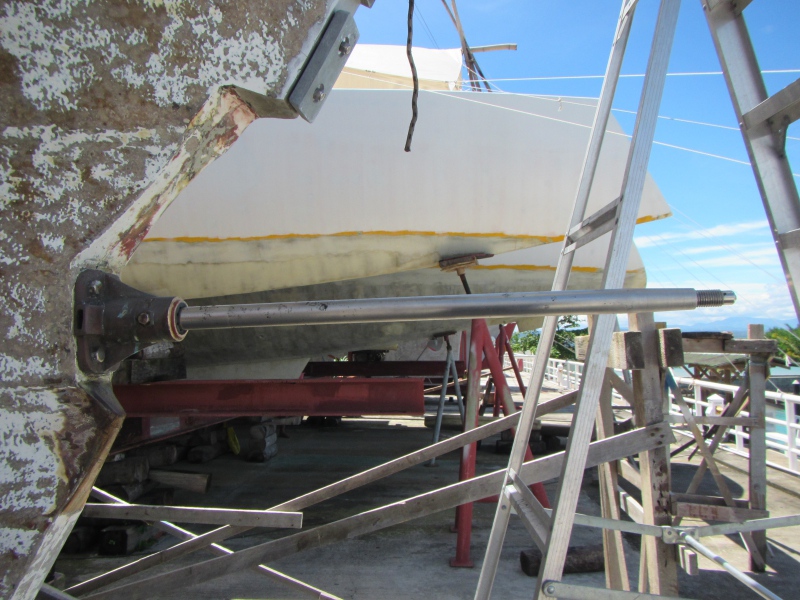
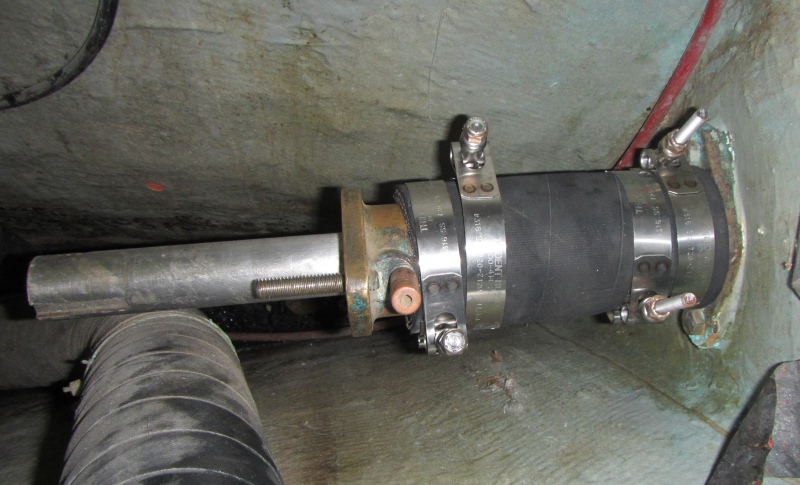
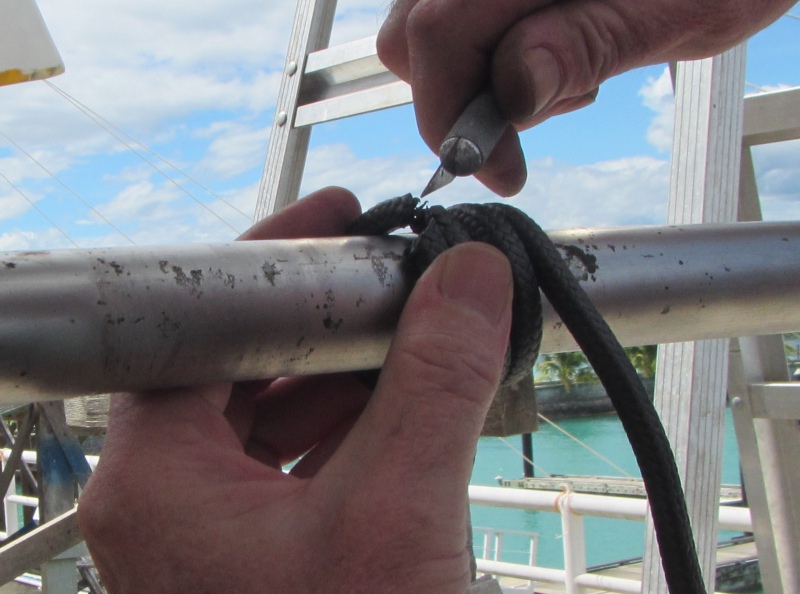
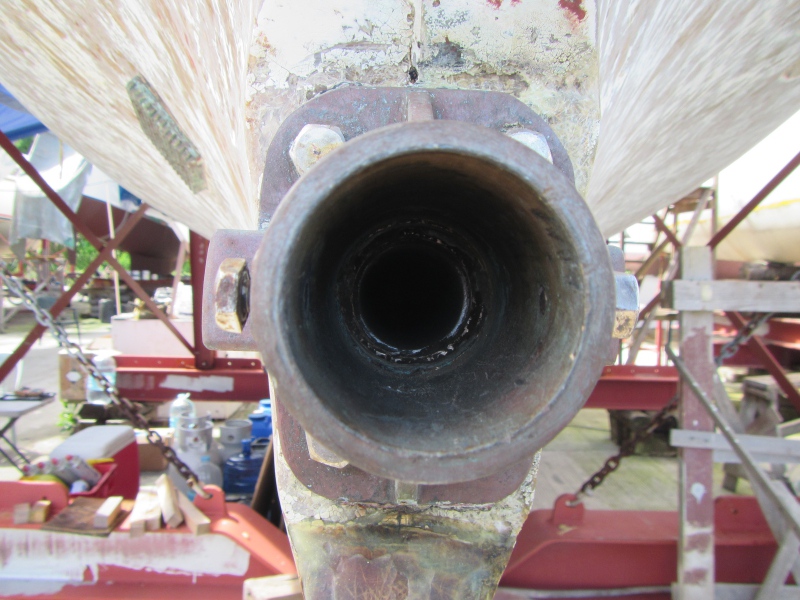
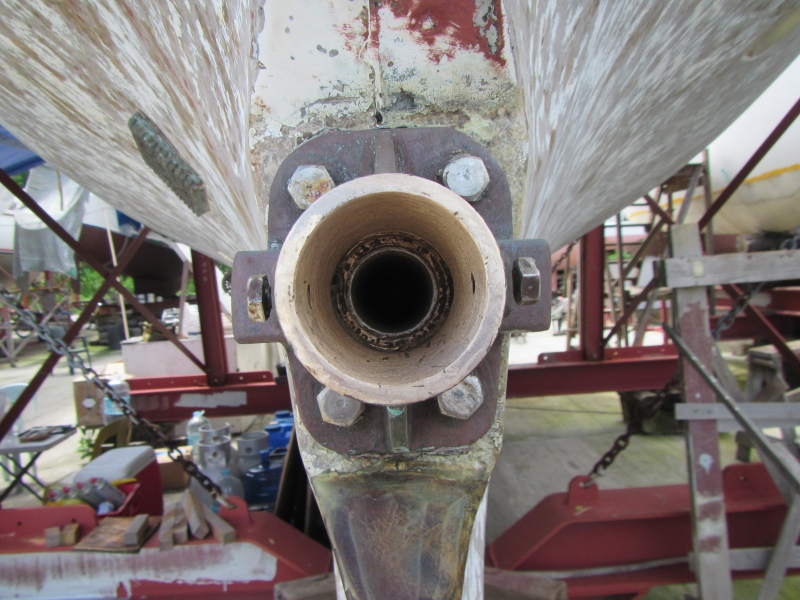
      The Buck Algonquin hose was cut in half using a hack saw.  As shown in pictures below:  The old original wire reinforced exhaust hose used for the stuffing box hose was compared to the new Buck Algonquin hose, both from a side view and a top down view.  There was no doubt which hose is more robust and safer to use.  The packing gland fittings and stern tube attach point were inspected and a wire brush wheel driven by a power drill was used to clean them up.  The propeller drive shaft was inserted next and the hose and fittings were placed over the shaft, arranged, and double clamps were installed at both ends of the hose.  Next the packing gland material was wrapped around the propeller shaft and cut at a 45 degree angle to make three rings of this material.  The rings were gently inserted around the shaft into the packing gland fitting with the cut ends offset by 1/3 of the circle diameter.  The top gland fitting was installed next and discovered for it to fit properly only two rings of packing gland material could be installed.  Removed one packing gland ring and was able to firmly seat the fitting down and then lock it in-place with the two nuts on each stud.   The water hose to the stuffing box hose barb will be installed when the engine seawater coolant anti syphon loop is repaired - To Do List item A0135.

      Installed the 4-inch shaft flange and shaft key on the propeller shaft with a liberal coat of Lanocote to minimize corrosion.  Took extra caution to align the flange on the shaft so the two ends of the set screws aligned with the corresponding dimples in the propeller shaft.  The two set screws were firmly tightened and lock in place with the lock nuts; then they were both safety wired together to prevent loosening up.  The four mount bolts with lock washer and nuts were installed and torqued down.

      Cutlass Bearing Install

      Cutlass Bearing Install

      • Action: To Do List item A0195 - Order replacement and spare cutlass bearing and install.
      • Completed: 16 October 2017
      • Cost: $188.97


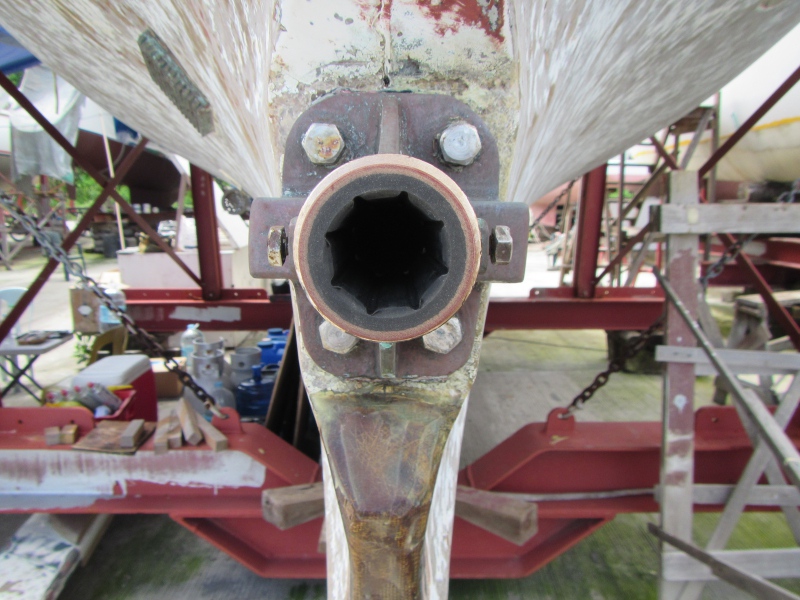
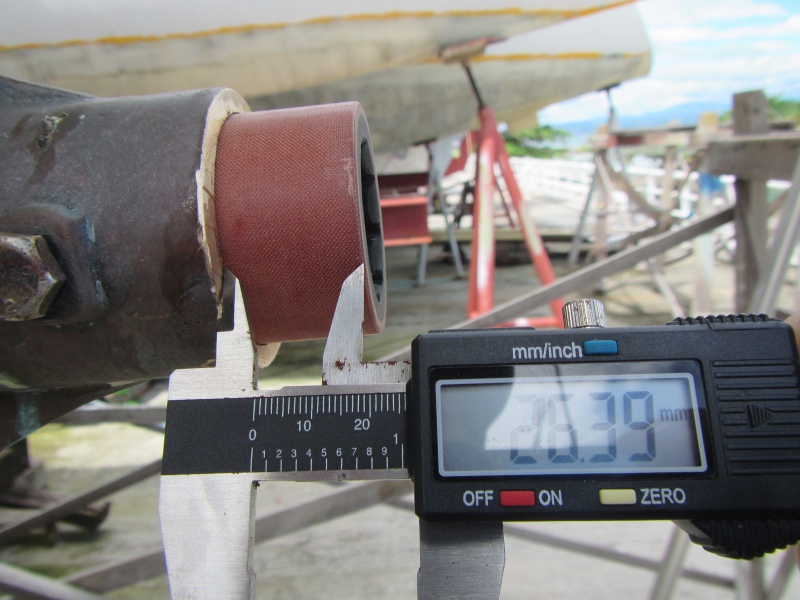
      One Johnson Duramax BITE Brass Cutlass Bearing ($72.99) - Shaft Size: 1-1/4 inch - Outside Diameter: 2 inch - Length: 5 inch and two Johnson Duramax DORIS Non-Metallic Sleeve Cutlass Bearings ($115.98) were ordered and received.

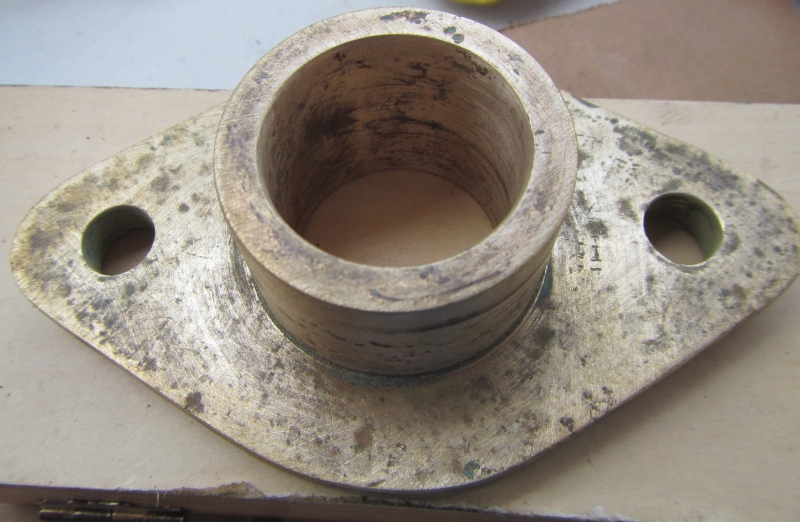
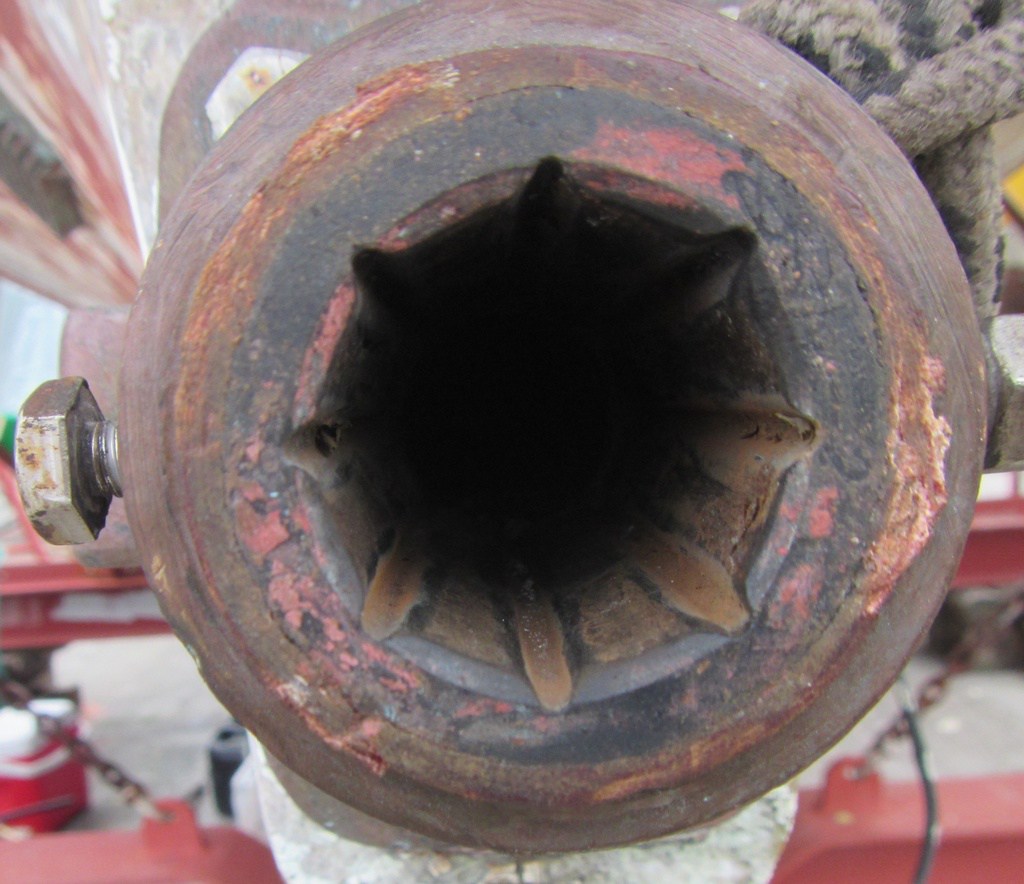
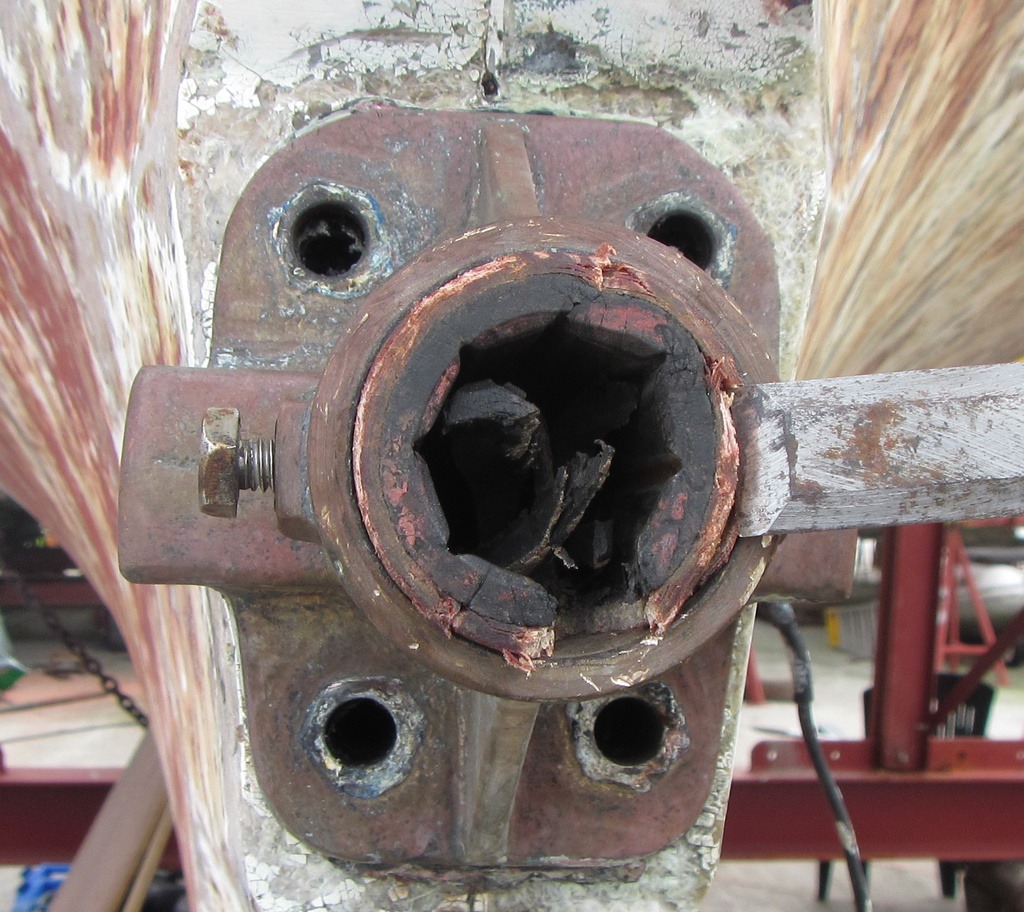
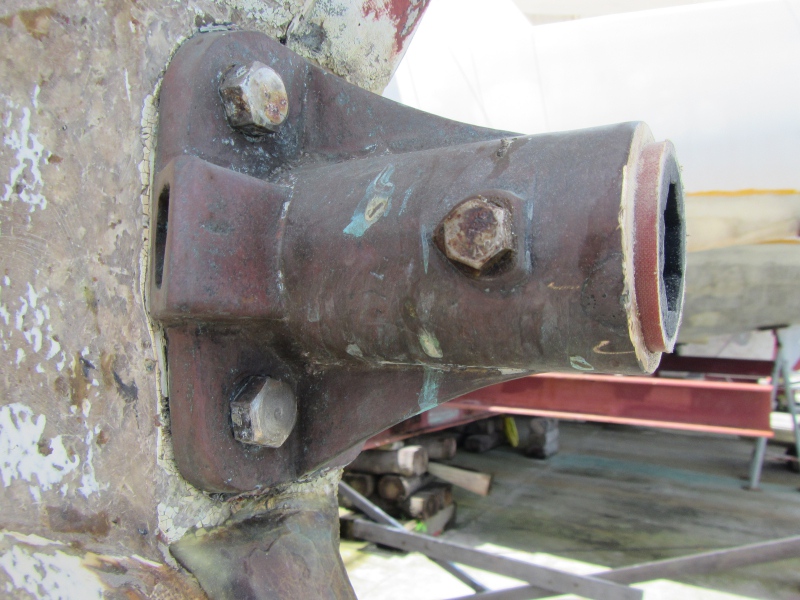
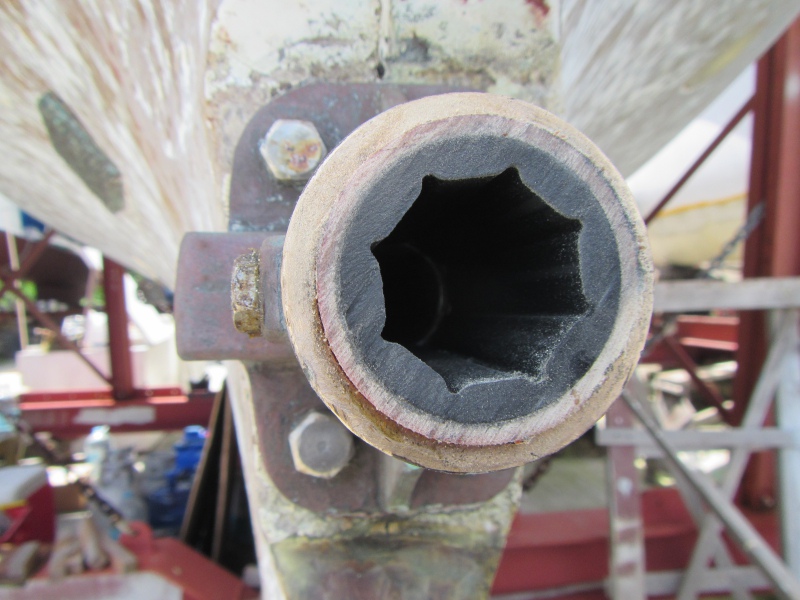
        As pictures below depict:  The old cutlass bearing was removed using a chisel. The internal cavity of the cutlass bearing housing was sanded smooth and clean using a Dremel rotary tool.  The Johnson Duramax DORIS Non-Metallic Sleeve  was aligned with the housing and set in place with the aid of a rubber mallet.  The two cutlass bearing retaining bolts were tightened down.  As expected, the new cutlass bearing was about one inch longer than needed and was cut shorter with a hack saw.  The remaining two new cutlass bearings were placed into ship's spares.
        Battery Replacement

        Battery Replacement

        Battery Replacement

        • Action: To Do List item A0174 – Delete GYS CT180 battery charger. Completed: 5 April 2017
        • Action: To Do List item A0179 – Redesign and rewire DC cables so that only one connection to the batteries exists.
        • Action: To Do List item A0180 – Add inline fuse protection within 12 inches of battery terminals.
        • Action: To Do List item A0182 - Add proper protective fuses to 12 VDC positive battery output circuit.
        • Action: To Do List item A0183 - Obtain replacement DC shunt and negative terminal bus bar.
        • Action: To Do List item A0184 - Redesign and rewire negative return cables to the batteries.
        • Action: To Do List item A0203 - Order and install four 6-volt AGM house bank batteries and one 12-volt AGM engine start battery.
        • Completed: 17 August 2017
        • Cost: $2,406.31


        As indicated on Battery Health and Capacitance page, all four 6-volt GEL house batteries and the 12-volt lead acid engine start battery needed to be replaced.

        The initial suspected reason for the batteries to go bad was age.  The four Toyama model NPG225-6, 6-volt, 225 amp hour, GEL batteries were labeled, "INSTALLED 14.03.09" on a piece of gray duct tape.  The date, 14.03.09, was interpreted as battery installation date of 14 March 2009, and this was likely as Indra was in Japan in 2009 and the Toyama battery brand is Japanese based - this means these Toyama batteries were 8-plus years old.

        The engine start battery was a Motolite Solar Master Deep Cycle 70 amp hour, lead-acid battery which is Philippine made and was suspected to be at least 4-plus years old.  This battery was not secured down and was just sitting on top of a wooden support base.  As for regular battery maintenance and charging, this was suspected to have been neglected while Indra was on the hard being worked on at Holiday Oceanview Marina and later when she sat idle at a dock slip - a period of at least 3-plus years.

        Lastly, a contributing factor to the batteries demise, was the shore based charging system was from a GYS CT180 battery charger designed to recharge only liquid lead acid batteries, NOT GEL type batteries.  Very important for battery life is adequate charging to full capacity and when this is neglected, performing regular battery equalization to reduce sulfation and premature failure.  Indra did not have adequate battery charging equipment aboard to perform manufacture recommended battery maintenance, charging, and equalization.

        Along with the removal of the five defective batteries, the GYS CT180 battery charger was also removed from Indra.

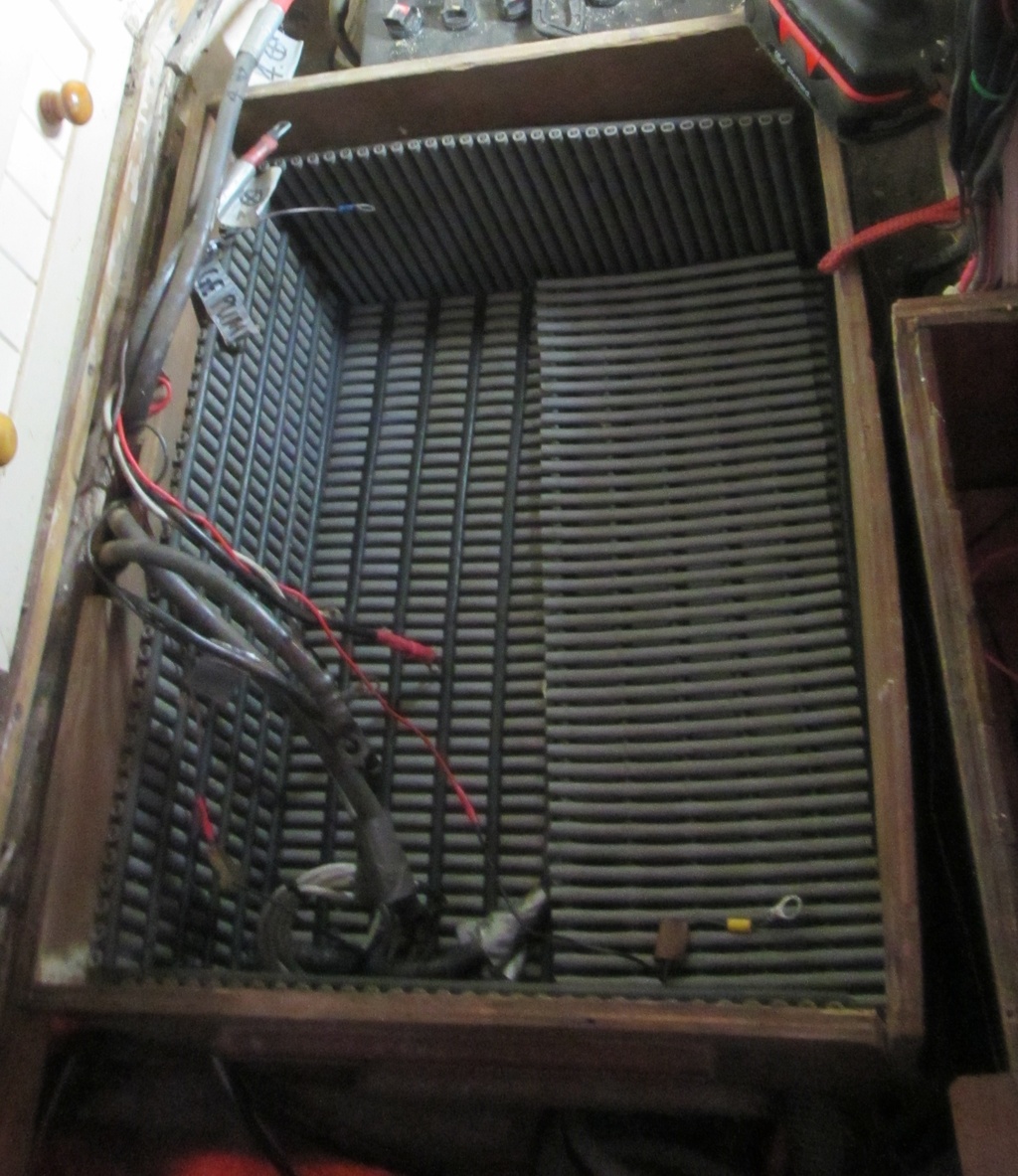
        The wooden battery box was discovered to be not secured to any of the wood supports underneath and could use of a fresh coat of epoxy and paint.  Also, it lack portals to ensure adequate ventilation of the batteries.  The internal dimensions of the battery box were: length -22", width - 16", and depth - 10.5", made of 3/8 inch plywood.  The Toyama NPG225-6 battery dimensions were: length -10", width - 6.75", and height - 9.75".  The dimensions of the box and battery would be a factor in determining the size of the replacement batteries.

        After internet research, the Absorbent Glass Mat (AGM) type of battery was chosen over a lead acid or GEL battery field of selection.  Based on reviews and past experience, selected Concorde Battery Corporation, four (4) Lifeline model GPL-4CT 6-volt, deep cycle, 220 amp hour, AGM batteries to make a house battery bank of 12-volt 440 amp hour size.  The dimensions of the Lifeline model GPL-4CT battery were length -10.22" / 259.6mm, width - 6.95" / 176.5mm, height - 9.63" / 244.5mm, and weight 66lbs / 30KG - they would all fit in the existing battery box.  The battery connection terminals were a copper threaded bolt of size M8 or 5/16-inch - important to know for proper selection of wire terminal lug hole size.  The Lifeline website had detailed design prints and technical manuals explaining almost all aspects of installation and routine battery maintenance requirements.  These maintenance requirements and method to track charge cycles, voltage levels, and any capacity loss were added to a separate periodic maintenance tracking list.

        The engine start battery selected was a single Lifeline model GPL-27T 12-volt, deep cycle, 100 amp hour, AGM battery. The dimensions of the Lifeline model GPL-27T battery were length -12.01" / 305.1mm, width - 6.36" / 161.5mm, height - 8.93" / 226.9mm, and weight 62lbs / 28.1KG.  The battery connection terminals were: positive terminal - copper threaded bolt of size M10 or 3/8-inch, and negative terminal - copper threaded bolt of size M8 or 5/16-inch.

        Ordered the batteries from Powerstride Battery and the Lifeline GPL-4CT batteries cost $299.92 each ($1,199.68 total), the Lifeline GPL-27T battery cost $279.92, California tax cost $137.86, and shipment of 374 pounds was free to our balikbayan box consolidator and forwarder in Los Angles, California, Manila Forwarder, and received there on 4 May 2017 - total cost was $1,617.46.

        A pictorial diagram of the battery bank with interconnect wiring was made.  External connection points to the battery bank are depicted with red/black circles and are at equal and opposite ends of the pair of series connected batteries.

        As the four 6-volt Lifeline GPL-4CT batteries were to be wired in series-parallel, the proper size of the battery interconnect cables needed to be determined - very little internet advice could be found on the exact size this cable should be except use cabling sized for the maximum load of the system.  Other advice stated that the battery interconnect cable lengths should all be of equal lengths to minimize electrical imbalances between the batteries - specific advice was all series battery interconnect cables should all be the same length and all parallel battery interconnect cables should all be the same length.  Internet advice also recommended to use a large cable size to minimize any cable resistance.  A common sense answer derived after research was simply use the largest practical size cable available for the interconnects since the lengths are relatively short (and disregard the cost for larger cable size).  Based on this we selected 4/0 AWG cable in colors red/black with 8 each 5/16" hole size 4/0 AWG terminal lugs.  Listed below are the items purchased to support this installation.


        Item Q Each Total
        4/0 AWG Tinned Marine Battery Cable - Red 12 $8.70 $104.40
        4/0 AWG Tinned Marine Battery Cable - Black 12 $8.70 $104.40
        4/0 AWG Tinned Seamless Marine Lugs - 5/16" 12 $2.39 $28.68
        1" Dual-Wall Adhesive Heat Shrink 3:1 Ratio - Red 3 $2.70 $8.10
        1" Dual-Wall Adhesive Heat Shrink 3:1 Ratio - Black 3 $2.70 $8.10
        Standard Cable Ties Black 100 Pcs. - 12" long 3 $4.45 $13.35
        Cable Tie Screw Mount - #10 Screw - 100ea 1 $23.00 $23.00
        Ancor 100-Piece Tinned Copper Lug Kit W/Crimper 1 $166.32 $166.32
        Ancor Mini Butane Torch 1 $22.32 $22.32
        Shipping $19.95
        $498.62


        Indra had multiple DC cables connected to the batteries and no overcurrent fuse protection was installed on any of them - reference the 7"/40"/72" ABYC E-11 rules.  Research on the electrical installation rules, regulations, and recommendations (ABYC E-11/USCG/CFR) detailed specific requirements and then stated exceptions to their rules - bureaucracy again at its best.  The book “Boatowner’s Mechanical and Electrical Manual” by Nigel Calder, was also reviewed and had solid advice and examples.  The electrical cable connections to the house bank needed to be protected by a fuse as close to the battery connection as possible and the number of cable connections to the battery bank kept to a minimum, ideally one positive and one negative connection.   Decided to use the Blue Sea Systems Dual MRBF Terminal Fuse Block with 300 amp block fuses to provide overcurrent protection on the positive output of the battery bank.

        This fuse block mounts/bolts to the battery positive output terminal mount bolt - really can't get any closer to the battery output than this provides.  One minor issue with the fuse block is its mount hole is designed for a M10 or 3/8-inch bolt while the selected Lifeline batteries use a M8 or 5/16-inch bolt - the battery mount hole surface area and use of a flat washer will ensure adequate surface contact to not degrade the connection point.  A pictorial diagram of the connections to the house bank of batteries to the positive and negative bus bars was made. The Blue Sea Systems Dual MRBF Terminal Fuse Block with 300 amp block fuse only provides overcurrent protection for the 4/0 AWG cable run to the DC positive bus bar (always hot bus bar).  Additional DC output cables connected to the DC positive bus bar will need to have their own overcurrent fuse protection installed.

        Listed below are the items purchased to support this installation.


        P/N Item Q Each Total
        5190 Blue Sea Systems Terminal Fuse 300 Amp 2 $15.79 $31.58
        2151 Blue Sea Systems Dual MRBF Terminal Fuse Block 1 $28.99 $28.99
        2104 PowerBar 600A BusBar - Four 3/8"-16 Studs 1 $72.00 $72.00
        2107 Blue Sea 2107 Powerbar 600 Ampere Cable Connector 8 X 3/8 16 Stud Terminal 1 $97.18 $97.18
        8255 Blue Sea 8255 Digital Meter Shunt 500a/50mv 1 $50.92 $50.92
        4/0 AWG Tinned Seamless Marine Lugs - 3/8" 4 $2.39 $9.56
        $290.23


        With parts ordered, it would be at least 3 months before they arrived by ocean shipment.  Regardless, there were plenty of other items on the list of issues to fix and solve.

        Added to the To Do List:

        • A0214 - Clean, sand, and apply paint to starboard quarter birth area before battery installation.
        • A0215 - Apply coat of epoxy and paint to wooden battery box.
        • A0216 - Determine method to secure wooden battery box to boat structure.
        • A0217 - Determine method to secure engine start battery to boat structure.


        On 17 August 2017, our ocean shipment arrived and was received with no damage.  These batteries were ordered 3 May 2017, which means 104 days passed before they were received - not an ideal logistical situation for completing tasks on a boat.

        The four Lifeline GPL-4CT batteries had a label (manufacturer's code) with a number and corresponding bar code - 01720137, 01720138, 01720139, and 01720167; while the Lifeline GPL-27T battery label displayed 01721348.  All the batteries had a round label (production date code) on the aft side displaying the letters "DQ".  A search on the internet yielded different methods that manufactures use to label the battery date of manufacture, but could not find specific information on the Lifeline method - even the Lifeline website yielded no answer.  The label with "DQ" was interpreted as shown in picture below.

        Sent email query to Lifeline stating that I suspected "DQ" meant date of manufacture of April 2017 and the bar code number (0172XXXX) last four digits were most likely the battery serial number - but what did the number "0172" mean?  There response was not informative and very disappointing: "The entire serial number indicates month, year and part number (in what order, I’m not sure – hence my calls to the manufacturing facility). You got the date code correct."  The date of manufacture and how old a battery is should be easily determined by a prospective customer - this information should be prominently displayed on the battery unencrypted and the use of a magic decoder should not be needed.  If a unique code is used, then the manufacture should freely disclose its interpretation in the manual and on their website.  It is telling that the battery is labeled with pictures and plain English text about warnings and hazards, yet the date of manufacture is encrypted - the integrity of this practice is definitely questionable. The suspected motivation of battery manufactures to encrypt the date of manufacture can be reasonably assumed to ensure the sale and purchase of their product to naïve customers without regard to the age of the battery - buyer beware!!

         Next, a trip back to Samal Island to start installation.


        LPG Tanks Replacement

        LPG Tanks Replacement

        • Action: To Do List item A0138 - Obtain replacement LPG tanks.
        • Completed: 1 August 2017
        • Cost: $717.13


        The reason to replace the two existing LPG tanks on Indra was their manufacture date of August 2002 had exceeded New Zealand's 10-year mandatory recertification requirement, the LPG tanks were made to specification MK 231/85 that Worksafe New Zealand had rescinded in March 2004, one LPG tank valve triangular handle broke off due to corrosion, and one LPG tank valve was stuck closed and could not be refilled in the Philippines.

        The existing LPG tank strap/mount installation was designed to only support a tank with a 256mm or 10 inch diameter - searches on the internet revealed only one LPG tank with this diameter but it was shorter in height and also had less LPG storage capacity.  Researched steel, composite, and aluminum LPG tanks and opted for aluminum material.  To use and modify the existing tank mount installation a tank with a full length consistent diameter was needed - most US made tanks had a smaller diameter collar for its base which ruled them out.  Decided to purchase two aluminum 10kg LPG tanks from Discount Marine in New Zealand and they cost US $467.12, with shipping of US $238.95, and Philippines Postal fee of US $2.24.  These tanks were ordered 20 July 2017 and received 1 August 2017.  These LPG tanks were made by the company Aluminiumarugyar and imported into New Zealand by Absolute Marine.  The LPG tanks were designated type 529.146 with New Zealand Lab approval of 2051, with Australian Approval number of  Q22080, and manufactured to specification EN 12862.


          LPG Tank Type 529.146 Specifications:
          Diameter:  298mm / 11.73 inches
          Height:  545mm / 21.49 inches
          LPG Capacity:  10kg / 22 pounds
          LPG (approx.):  19L / 5 gallons
          Test Pressure (bar):  33MPa
          TW (Tare Weight):  7.1kg / 15.65 pounds
          WC (Water Capacity):  22.6Kg / 49.82 pounds
          EW (Empty Weight):  6.75Kg / 14.88 pounds
          Specification:  EN 12862
          New Zealand LAB:  2051
          Australian Approval:  Q22080


            The LPG tank serial numbers were 662 and 666, both with manufacture date of August 2015 - added August 2025 for next LPG tank recertification date to our master tracking list of Due Dates.  Both LPG tanks had a Overfill Prevention Device (OPD) valve installed that stops the tank from being overfilled automatically by shutting the valve when the propane level reaches a certain point. It also prevents propane from leaving the tank when the nozzle is opened and its not hooked up to anything.  This OPD valve limits tank capacity to approximately 80% - so the following computations indicate a more realistic expectation of LPG capacity - WC 22.6KG = 49.82lbs divided by 8.34 lbs per gallon of water = 5.97 gallons (22.6L) times 80% capacity = 4.78 gallons  (18.1L) times propane weight about 4.24lbs per gallon = 20.27lbs (9.19KG) of propane.


              These new tanks had no markings to identify them as LPG tanks.  Research on the internet provided the answer to LPG tank marking requirements/regulations and cylinder shoulder labels for Class 2 Flammable Gas like the one below were ordered.


                Added to the To Do List:

                • A0211 – Modify existing LPG tank strap/mount installation to support a tank with a 298mm or 11.73 inch diameter.
                • B0212 - Make two LPG tank protective covers out of Sunbrella material.
                • B0213 - Engrave and stencil SV DOVE USCG COD 600692 on both LPG tanks.
                • A0224 - Order and install LPG tank warning/safety labels.


                Standing Rigging Replacement – Running Backstays

                Standing Rigging Replacement – Running Backstays

                Running Backstays

                • Action: To Do List item A0173 – Replace all turnbuckles and rigging wire.
                • Completed: 26 April 2017
                • Cost: $274.80


                Ordered and received the following items for the running backstays:

                P/N Starboard mid-aft adjustable stay - 1/4" 1x19 316 SS cable Q Cost
                133-06 Sta-Lok Eye - 1/4" wire X1/2" pin 2 $77.90
                141x19316 1/4" 1x19 type 316 stainless 34 $59.50
                $137.40
                Port side mid-aft adjustable stay - 1/4" 1x19 316 SS cable
                133-06 Sta-Lok Eye - 1/4" wire X1/2" pin 2 $77.90
                141x19316 1/4" 1x19 type 316 stainless 34 $59.50
                $137.40


                We removed a block from the lower eye terminal and disconnected the top eye terminal from the mast. 

                We installed a Sta-Loc Eye terminal on the 1/4 inch spool of wire and measured it for length to cut the new wire.  Both running backstay wires were cut at 26 feet 10 inches, a lot shorter than the 34 feet estimated and purchased.  The original wire eye-to-eye length was about 26 feet 11 inches.  The wires were than reinstalled aboard.

                The original running backstays were modified to include three sections of baggywrinkles for sail chafe protection.  This was not installed on the new wires.  The following picture depicts the length and location of the baggywrinkles on the running backstays.