Standing Rigging Replacement – Intermediate Shrouds

Standing Rigging Replacement – Intermediate Shrouds

Intermediate Shrouds

  • Action: To Do List item A0173 – Replace all turnbuckles and rigging wire.
  • Completed: 26 April 2017
  • Cost: $412.14


Ordered and received the following items for the intermediate shrouds:

P/N Intermediate Shroud - Starboard   - 1/4" 1x19 316 SS cable Q Cost
141x19316 1/4" 1x19 type 316 stainless 32 $56.00
133-06 Sta-Lok Eye - 1/4" wire X1/2" pin 1 $38.95
12FBJ Hayn Jaw Body Only Turnbuckles •Pin Diameter: 1/2", Wire Diameter: 5/16" •Turnbuckle Length: 6.5", Thread size: 1/2-20 L.H 1 $68.00
136-06 Sta-Lok Stud 1/4 wire X1/2" UNF Right Hand 1 $43.12
$206.07
Intermediate Shroud - Port   - 1/4" 1x19 316 SS cable
141x19316 1/4" 1x19 type 316 stainless 32 $56.00
133-06 Sta-Lok Eye - 1/4" wire X1/2" pin 1 $38.95
12FBJ Hayn Jaw Body Only Turnbuckles •Pin Diameter: 1/2", Wire Diameter: 5/16" •Turnbuckle Length: 6.5", Thread size: 1/2-20 L.H 1 $68.00
136-06 Sta-Lok Stud 1/4 wire X1/2" UNF Right Hand 1 $43.12
$206.07


We removed the port side intermediate shroud first by cutting the wire right above the turnbuckle stud terminal. Then went up the mast and removed the cotter and clevis pin from the eye terminal.  The wire was then pulled upwards through the spreader end and then removed from the boat.  We then installed a Sta-Loc Eye terminal on the 1/4 inch spool of wire and measured it for length to cut the new wire.  The wire was cut at 29 feet 11 inches, shorter than the 32 feet estimated and purchased.  The original wire eye-to-eye length was about 30 feet 11 inches.  The wire with the Sta-Loc Eye terminal was then attached up the mast with new clevis and cotter pins.  The non-terminated end of the wire was then routed thru the spreader end and a Sta-Loc Stud terminal was installed on the end of the wire and screwed into the new turnbuckle.  It was then installed with new 1/2 inch clevis pins.  This process was repeated for the starboard side intermediate shroud. Both port and starboard side intermediate shroud wires were of the same length.

As noticed on initial inspection the port intermediate shroud wire is contacting a mast step.  This minor issue can be rectified by removing and lowering the position of the mast step on the mast.  The installation of the new port intermediate shroud wire exhibits this same issue.

Galley Sink Discharge Thru Hull

Galley Sink Discharge Thru Hull

  • Action: To Do Lis item A0080 – Obtain 1 1/2 inch marine rated hose and clamps.
  • Action: To Do List item A0081 – Remove, clean-up, add backing plate, reinstall, and reseal the galley sink discharge 1 1/4 inch thru hull.
  • Completed:  A0080 - 10 July 2015.  A0081 - 24 April 2017
  • Cost: $303.80


The galley sink discharge non-marine rated hose was attached to a thru hull that was also the heat exchanger for the Isotherm 3751 ASU SP sea water cooled refrigeration system aboard.  No seacock was installed for this under the water line location, which is one of the primary reasons for this To Do List action item.  The need to remove and reseal this thru hull was a result of a failed attempt to tighten a NPT (National Pipe Thread) threaded seacock on the BSP (British Standard Pipe) threaded thru hull - see further story here.  This failed attempt resulted in the thru hull turning and most likely breaking the seal the old sealant provided.


A pictorial diagram depicting the complete system was created to identify and illustrated the parts and material needed.

    The following items were ordered and received mostly by ocean freight shipment.


    P/N Item Q Each Total
    405726 Maestrini Bronze Body Ball Valve 1.25" BSP Female Stainless Steel Handle 1 $62.40 $62.40
    435066 Maestrini DZR Straight Hose Tail (1-1/4" BSP Male to 38mm Hose) 1 $12.93 $12.93
    -- DHL 3 to 4 Day Shipping $47.45
    -- Philippines Duty and Customs Fees $38.04
    IBV-1250 Groco IBV Series Full Flow Inline Ball Valve Thread Size: 1-1/4" Female NPT 1 $49.49 $49.49
    FF-1250 Groco FF-Series Straight Full Flow Pipe to Hose Adapter 1-1/4" NPT x 1-1/2" ID Hose 1 $17.99 $17.99
    SBE00006AA Isotherm SP Refrigeration System Replacement Zinc Anode 1 $26.99 $26.99
    134-112 Trident Heavy Duty Engine Intake Water & Heater Hose - 1-1/2 Inches 5 $7.19 $35.95
    316064 AWAB Marine Grade Hose Clamps SAE Size: 32 Clamping Range: 1-1/2" - 2-1/2" 4 $3.14 $12.56
    $303.80


    Explanations:  The Groco ball valve and hose adapter were ordered but the incorrect part as their threads did not match the Isotherm BSP (British Standard Pipe) threaded thru hull.  Not included in these costs were the thread sealant, 3M Marine Adhesive Sealant 4200, or the Interlux InterProtect HS Epoxy Primer (YPA422 / YPA420) paint as the cost of these were accounted elsewhere.

    The kinked non-marine rated hose and rusted clamps were removed and discarded.  Next the attempts to back off the retaining brass nut on the thru hull were extremely difficult.  A spanner wrench was used with no success.  Then a pipe wrench was held on the large brass nut while the movement of the wrench was performed by a partner resulting in it finally breaking loose. A drill with wire wheel attachment was used to clear the threads of the residue sealant and contaminants, and finally the brass nut was clear and off.  The brass thru hull was gently pressed down and out without damage to the delicate refrigeration heat exchanger lines enabling the removal of the old sealant.  The old sealant was removed from the hull hole area using razor blades.

      The exterior and interior surfaces were sanded with 80 grit sandpaper and the area wiped clean.   Two coats of Interlux InterProtect HS Epoxy Primer (YPA422 / YPA420) were applied to the exterior and interior surfaces and allowed to cure dry.  The Maestrini Bronze Body Ball Valve threaded easily and fully down onto the Isotherm thru hull - definitely is easier to join two threaded items when the threads (1.25 inch BSP) are of matching type.   All the items were reinstalled, dry-fitted, to verify fit and alignment, before final installation with the application of sealant.

        The Isotherm 3751 ASU SP thru hull had 3M 4200 Marine adhesive sealant applied and the internal bronze nut was fully tightened down.  The new hose barb and seacock threads had Teflon sealant tape applied and were then assembled together.  This was then screwed onto the thru hull flange fully tight while making sure there was no movement against the hull of the thru assembly.

        Battery Health and Capacitance

        Battery Health and Capacitance

        Battery Health and Capacitance


        • Action: To Do List item A0181 – Determine health and capacitance of batteries.
        • Completed: 23 April 2017
        • Cost: $120.00


        As previously discovered, on 8 February 2017, the voltage check of the Toyama model NPG225-6 batteries did not yield favorable results.  These batteries were still connected to the solar charger and to obtain such extremely low voltage readings meant the batteries were all suspect - dead.

        When we returned to Indra on April 2017, we discovered the top of three of the four Toyama model NPG225-6 batteries had distortions and cracks - these batteries were all unusable.  A check of the Motolite Solar Master Deep Cycle 70 amp hour, lead-acid battery also revealed its liquid had evaporated off and the battery was also dead.

        After checking with the other boat owners and limited internet searches, it became very clear that either GEL or AGM batteries were unavailable locally.  Went to a Motolite store in Davao City, and purchased another Motolite Solar Master Deep Cycle 70 amp hour, lead-acid battery for Peso 6,000.00 (US $120.00) as a temporary solution.

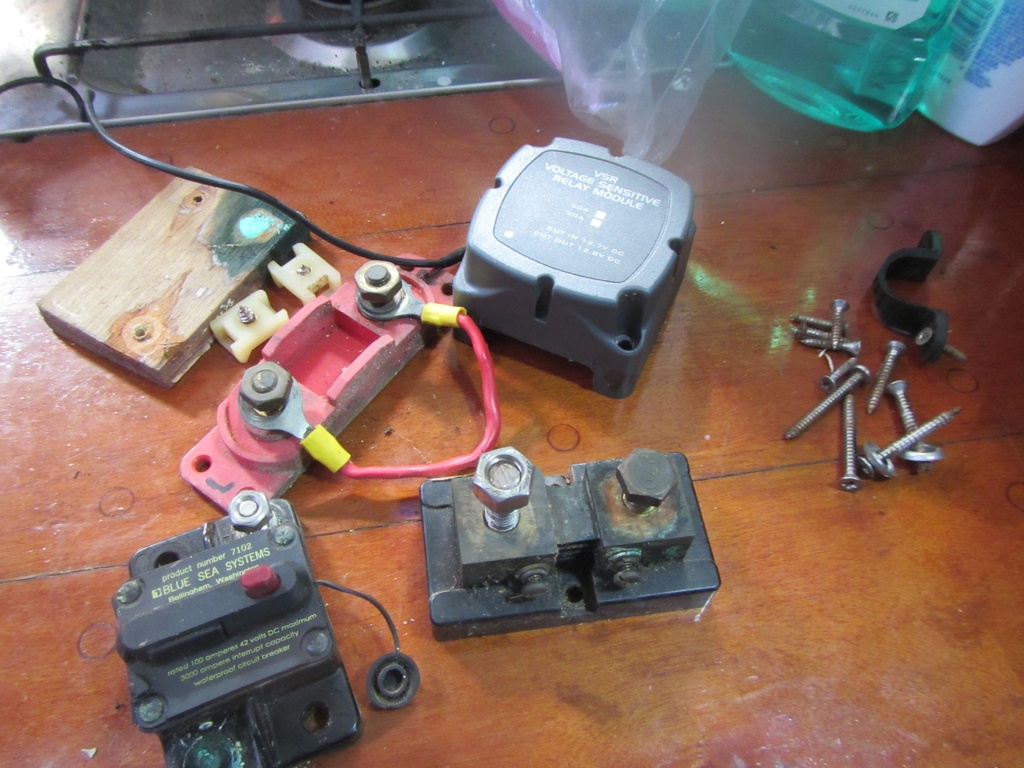
        On the aft starboard side, removed the batteries, the battery box, and the electrical components mounted on the bulkhead wall since most of these components were defective anyway. As the picture reveals - a rat's nest of wiring problems was exposed.

        Next sorted out the existing wiring and connected the new Motolite Solar Master Deep Cycle 70 amp hour, lead-acid battery, to act as the house bank battery.  The solar charger output was also connected to the battery. This enabled use of LED lighting and DC powered fans.

        Research on the internet for suitable, same physical size, AGM replacement batteries was on hold until we returned to Naga City, Cebu as the internet speed at Holiday Oceanview Marina was severely limited.


        Added to the To Do List:

        • A0203 – Order and install four 6 volt AGM house bank batteries and one 12 volt AGM engine start battery.
        • A0214 – Clean, sand, and apply paint to starboard quarter birth area before battery installation.
        • A0215 – Apply coat of epoxy and paint to wooden battery box.
        • A0216 – Determine method to secure wooden battery box to boat structure.
        • A0217 – Determine method to secure engine start battery to boat structure.


        Bottom Paint Removal

        Bottom Paint Removal

        • Action: To Do List item A0057 – Remove all bottom paint.
        • Completed: 21 April 2017.
        • Cost: $302.58.


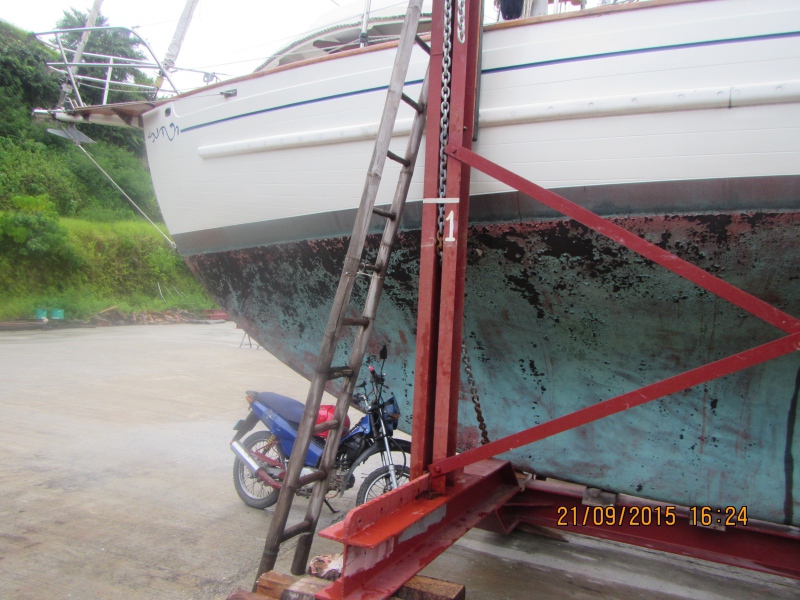
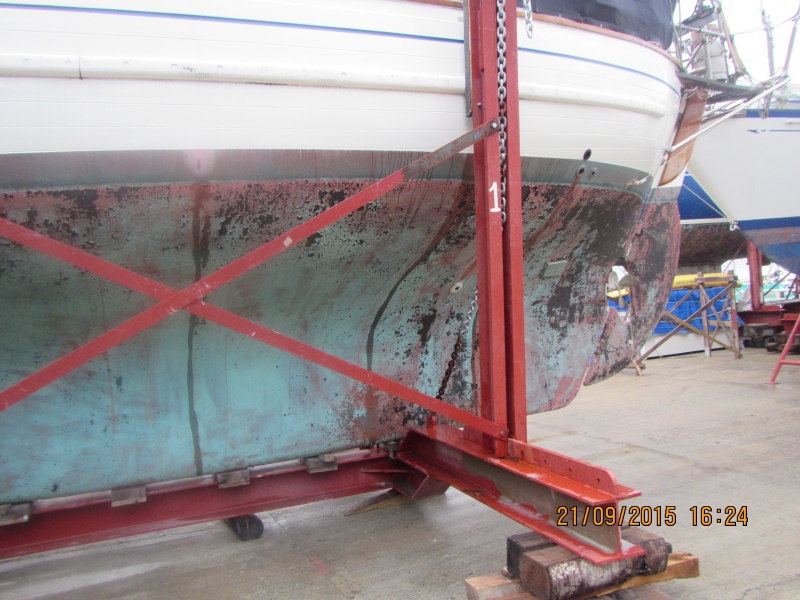
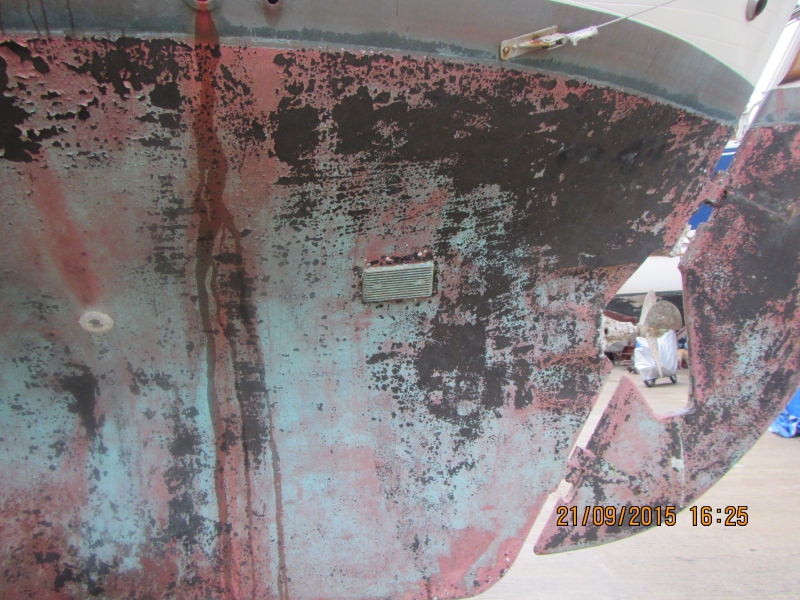
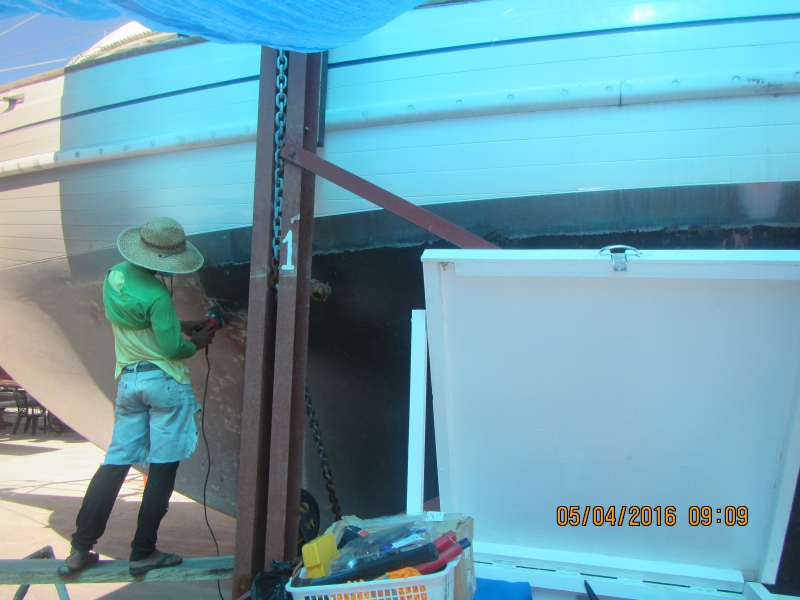
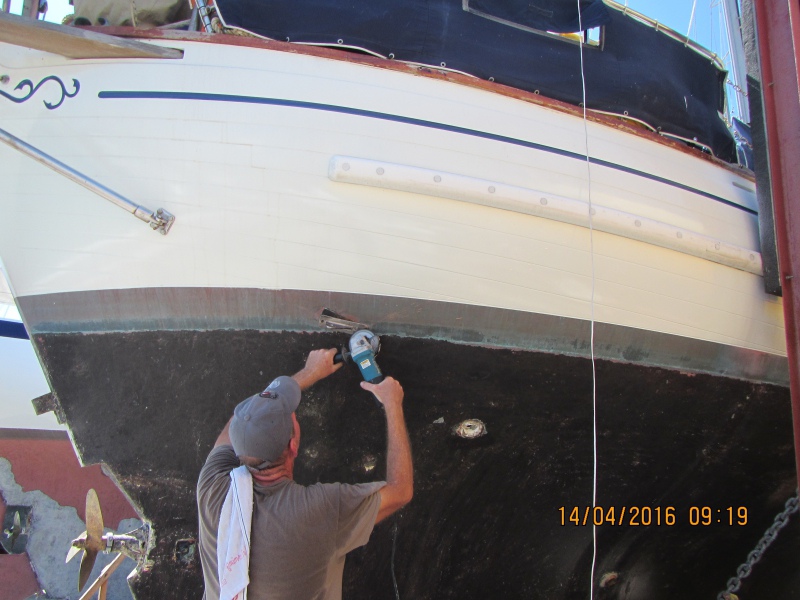
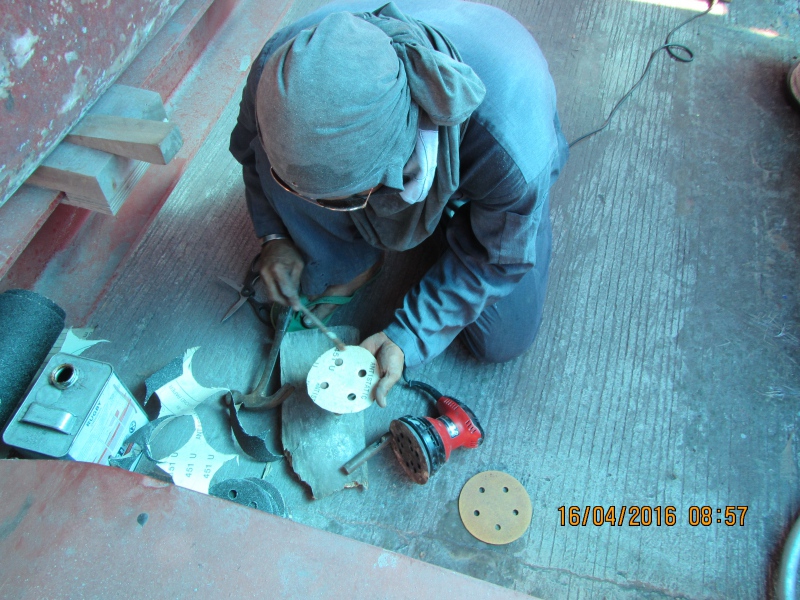
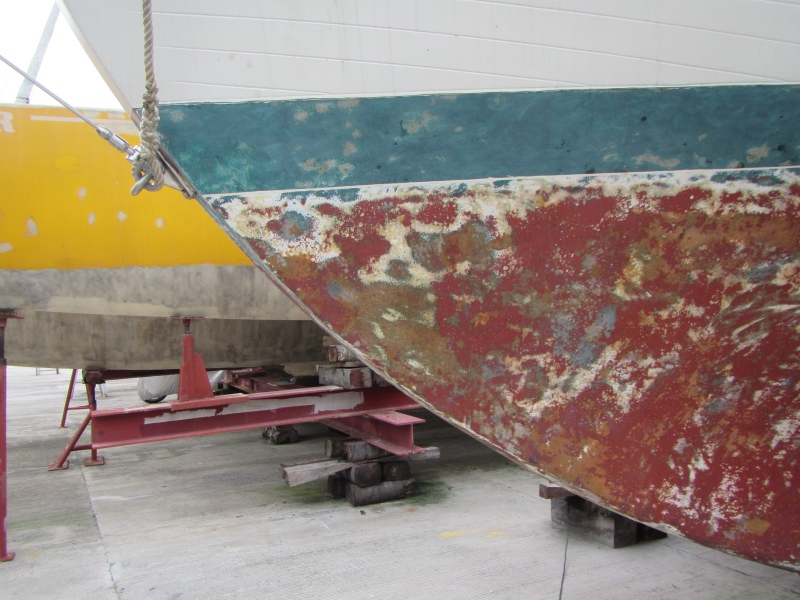
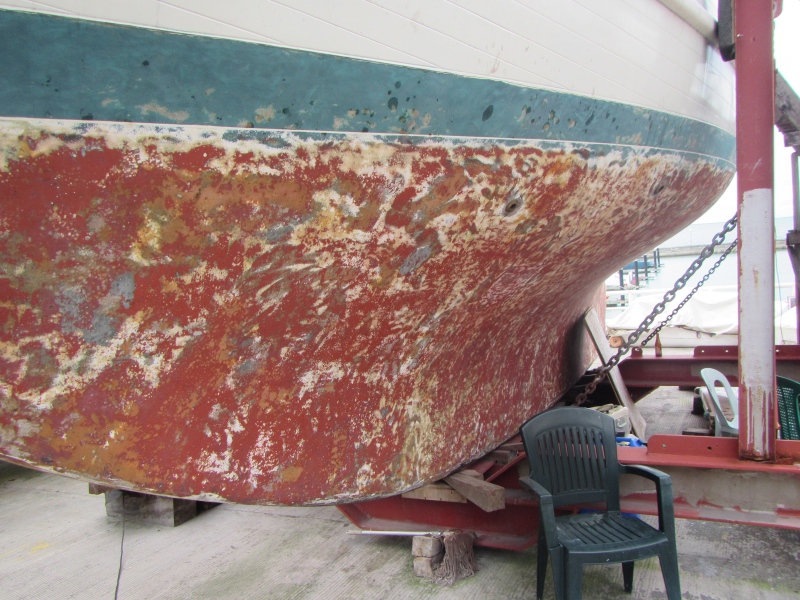
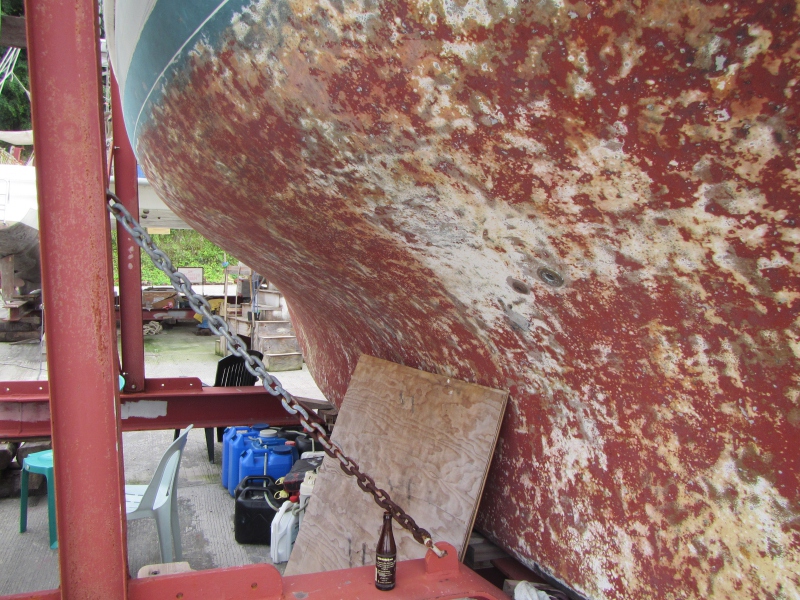
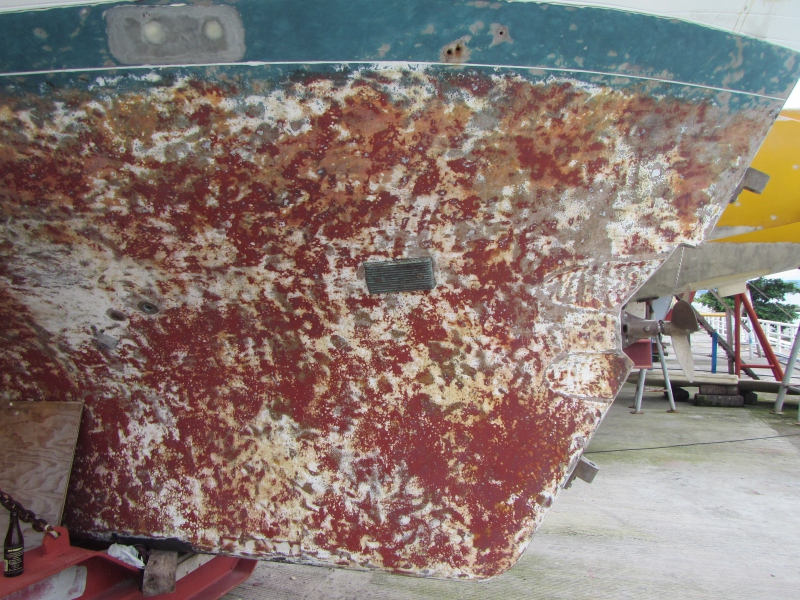
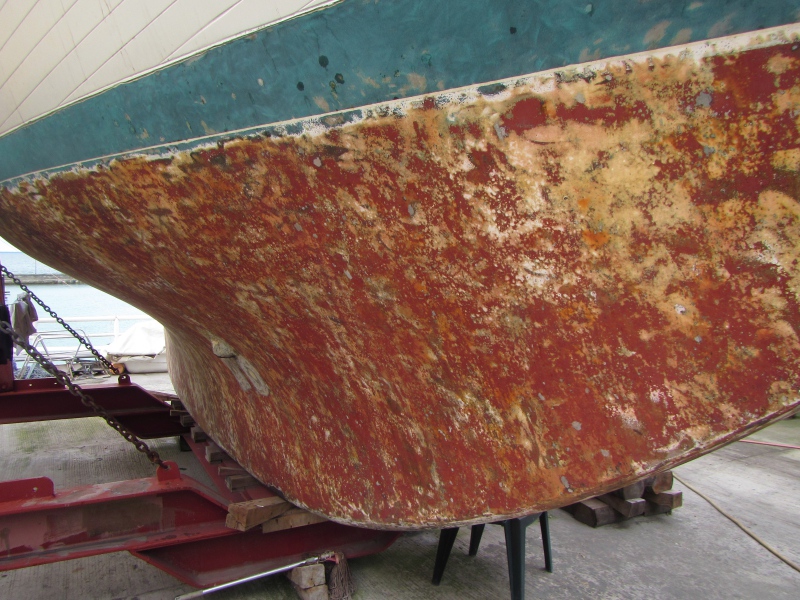
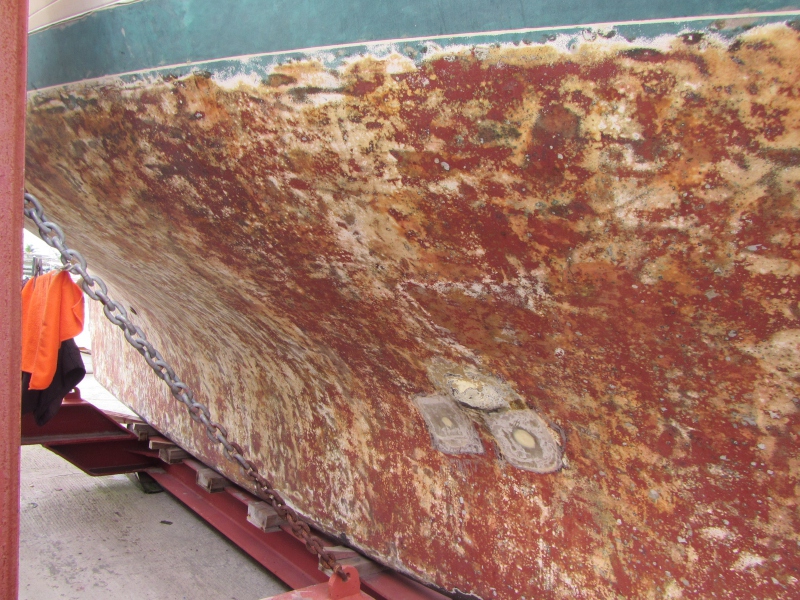
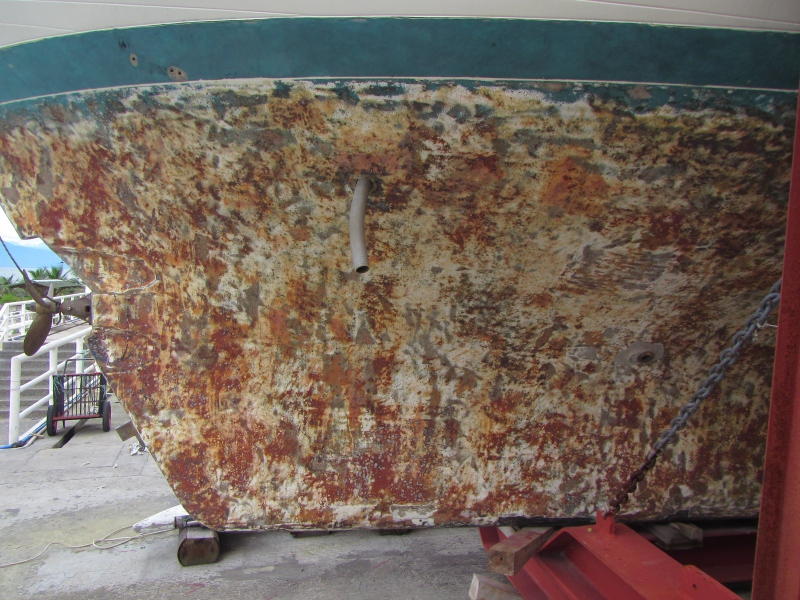
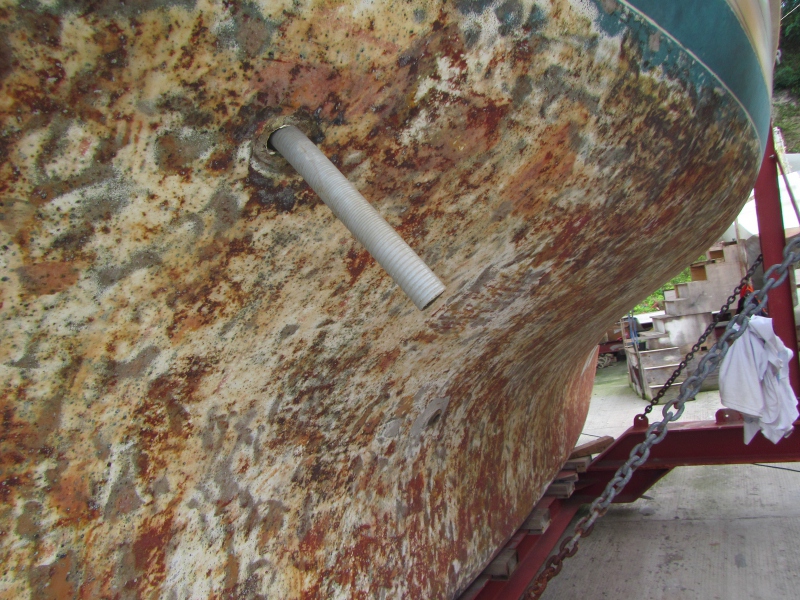
        The reason to remove the bottom paint was the ablative anti-foul bottom paint was flaking and falling off - also the barrier coat quality was extremely questionably.  We had previously ordered a Warner Tools 690 Big 4-Inch Blade Scraper ($11.59) and replacement blades ($24.38).  The first step was to scrape the entire hull to be followed by first sanding with 36 grit; with final sanding at 80 grit.  We hired one local Filipino worker, recommended by a cruiser in the yard, for two weeks at P600 pesos ($12.50) per day to assist.

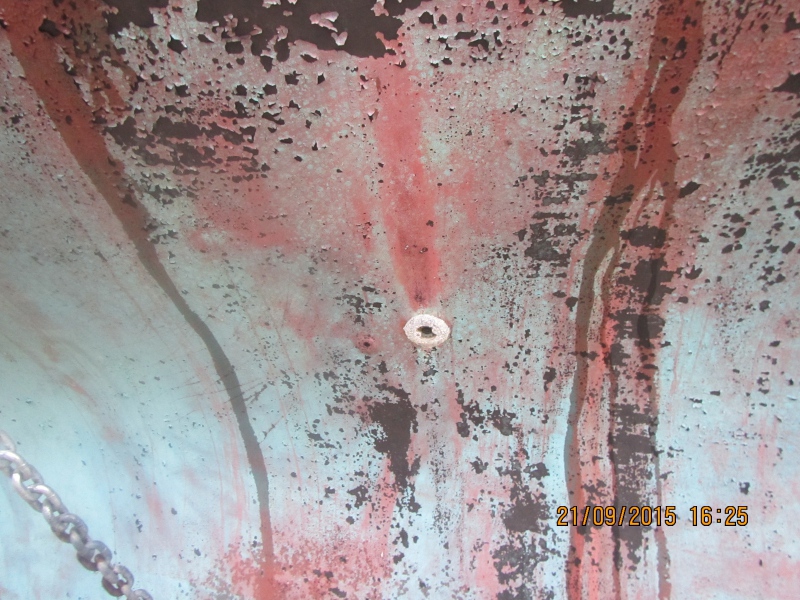
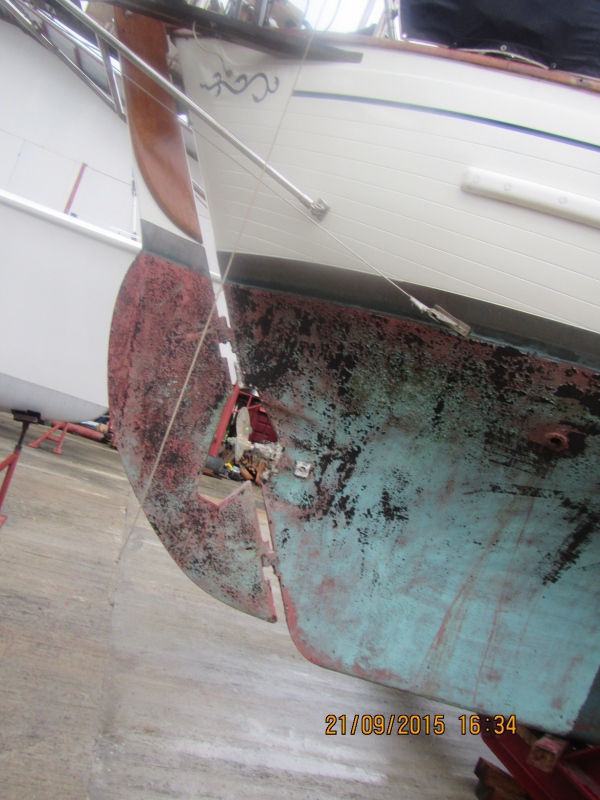
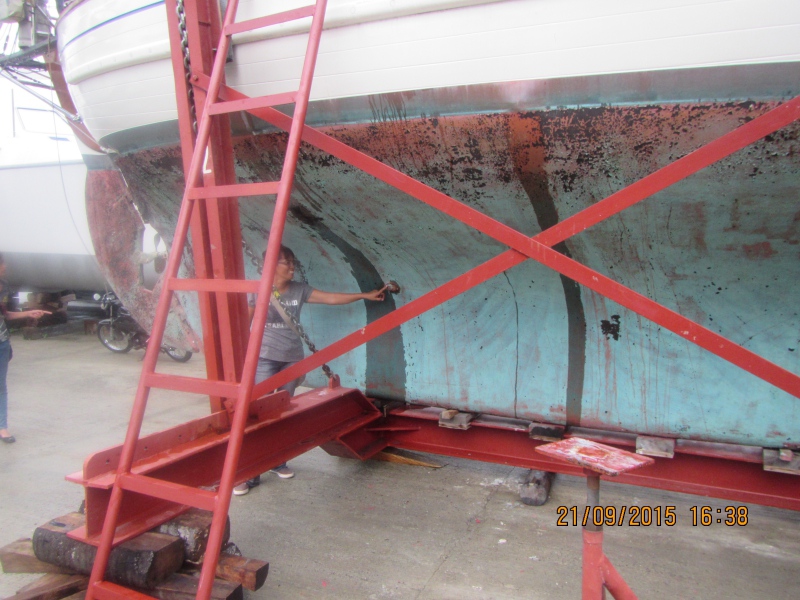
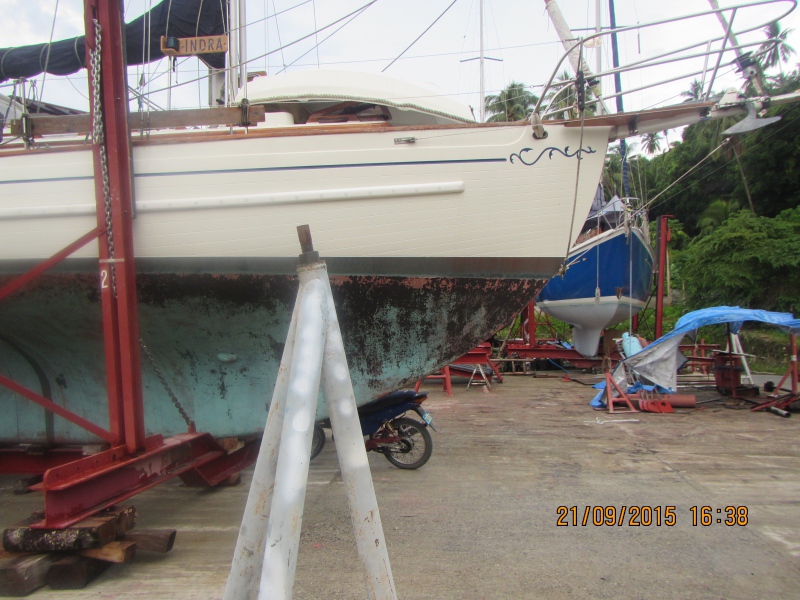
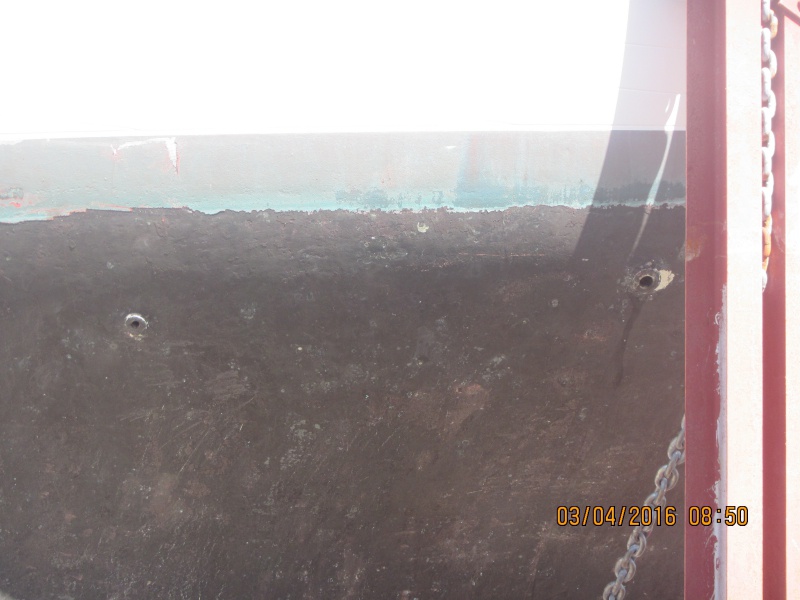
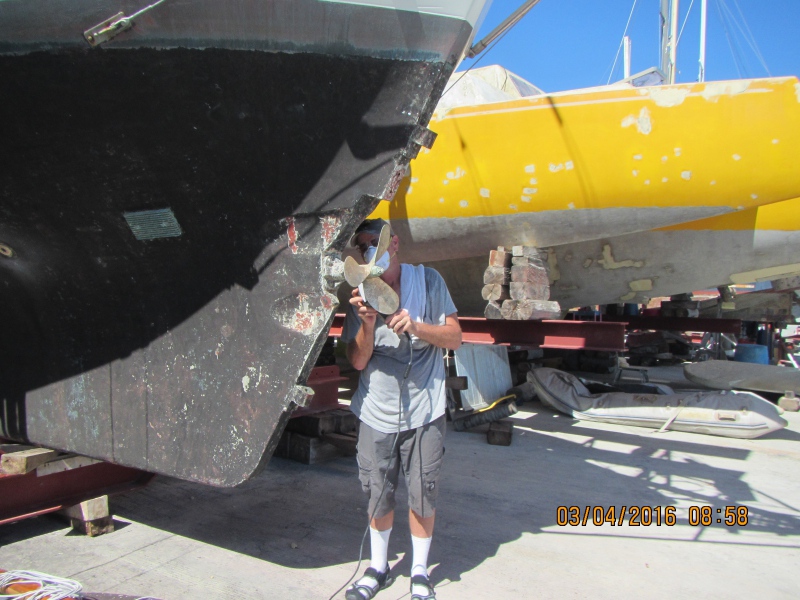
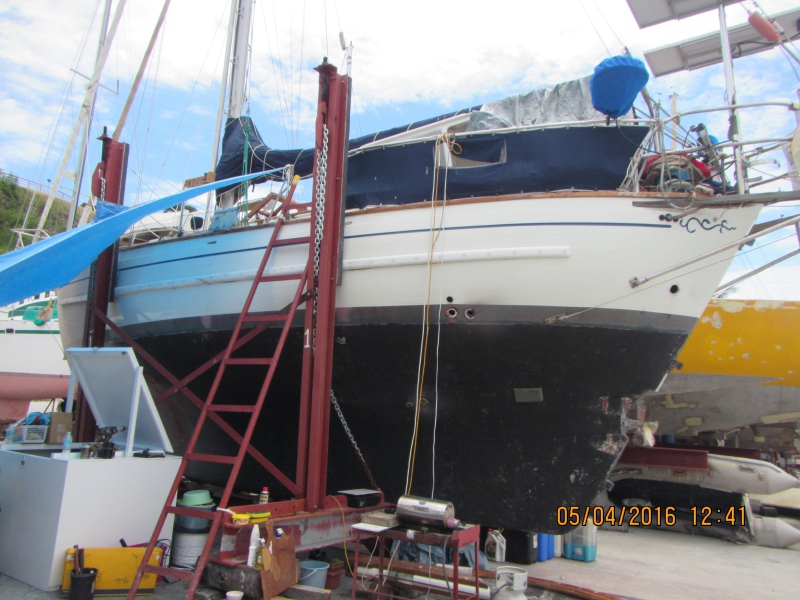
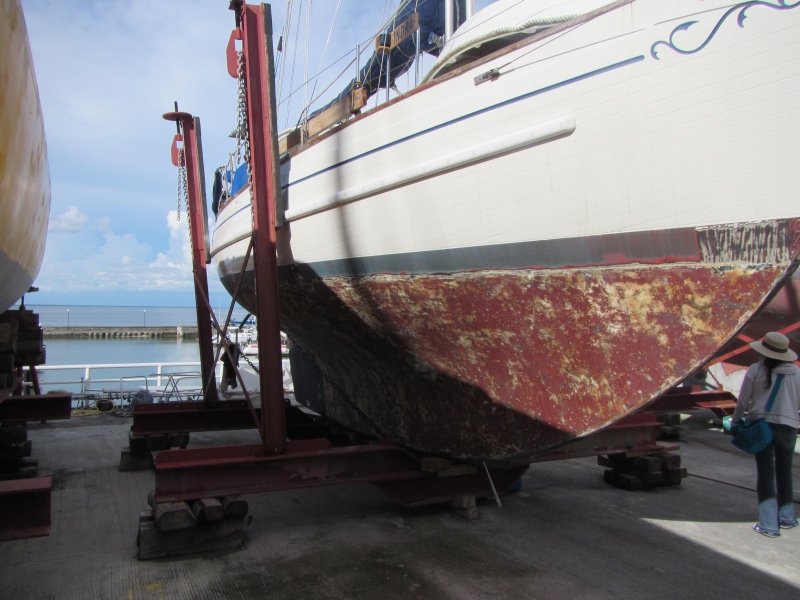
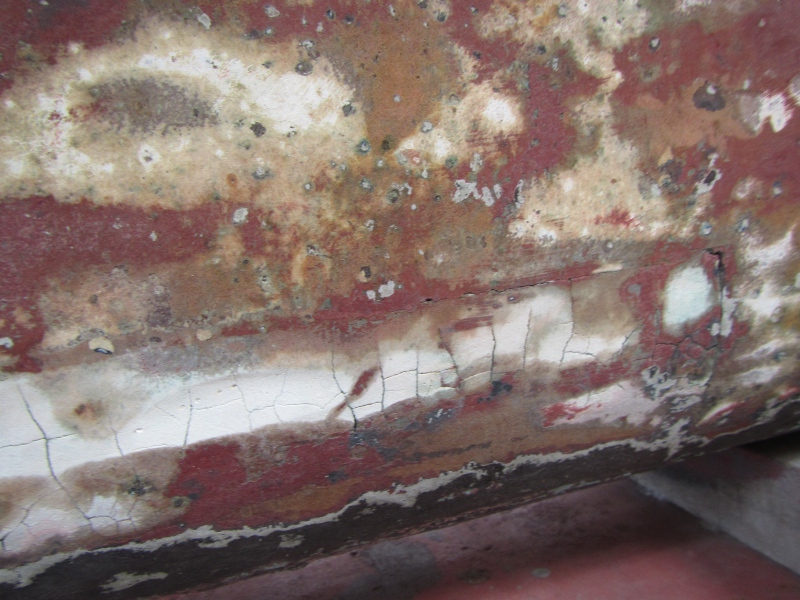
        The following pictures illustrate the initial paint state/status after just five days on the hard, drying out.

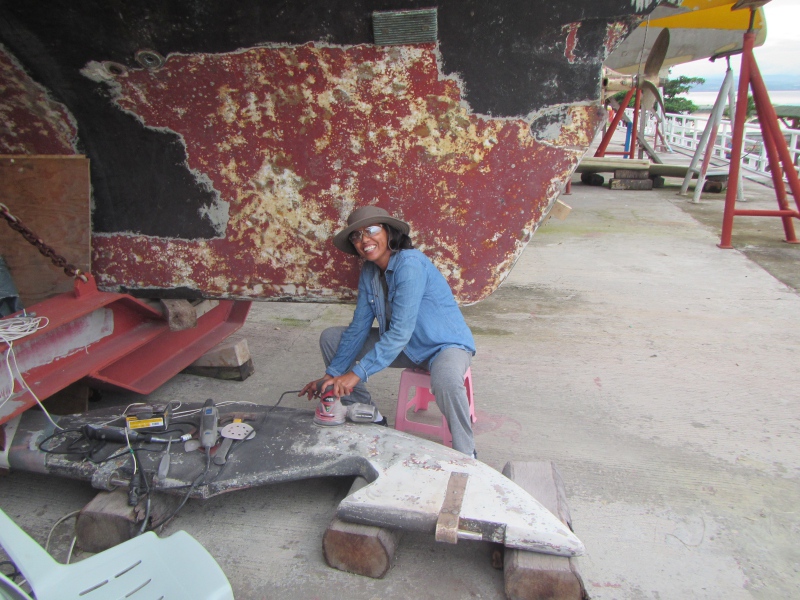
          The paint scraper was used first to remove as much loose paint as possible resulting in only the black barrier paint requiring sanding to be removed.  Next 36 grit sandpaper was used to remove the barrier coat and other layers of paint discovered underneath.  Our guess was there were possibly seven different layers and types of paint including the black barrier coat that needed to be removed by sanding.  The boot stripe was also sanded down.  After two weeks about 60% of the bottom was sanded with 36 grit and work stopped as we returned to Naga City, Cebu.  Due to the  unexpected absences of our local worker only 11 days were paid at cost of P6,600 ($137.50) and P550 ($11.46) for locally acquired 36 grit sandpaper and Rugby glue.
            When we returned, we hired another local Filipino yard worker who's positive work ethic we had previously observed, at a rate of P500 ($10.20) per day.  His task was to complete the removal of the barrier coat with 36 grit sandpaper and then sand the entire bottom again with 80 grit.  We trusted this worker enough to continue work in our absence to complete the 80 grit sanding of the hull, which he finished 14 November 2016.  The cost of his labor totaled P3,750 pesos ($76.53) and materials P2,015 pesos ($41.12).

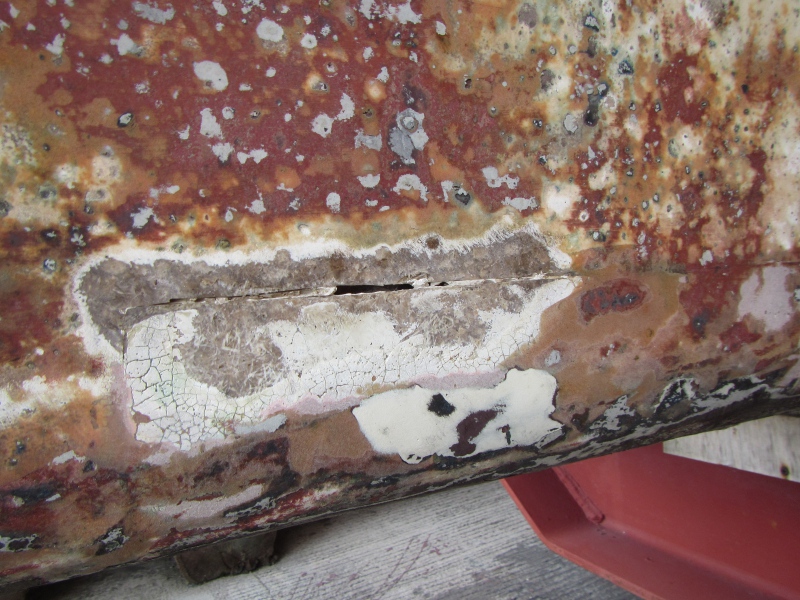
              At the base of the keel, the three areas missing sections of paint, were clearly visible.  The loss of paint was caused by previously applied filler material that was cracking, separating, and falling off.  These sections would be ground out and refilled.
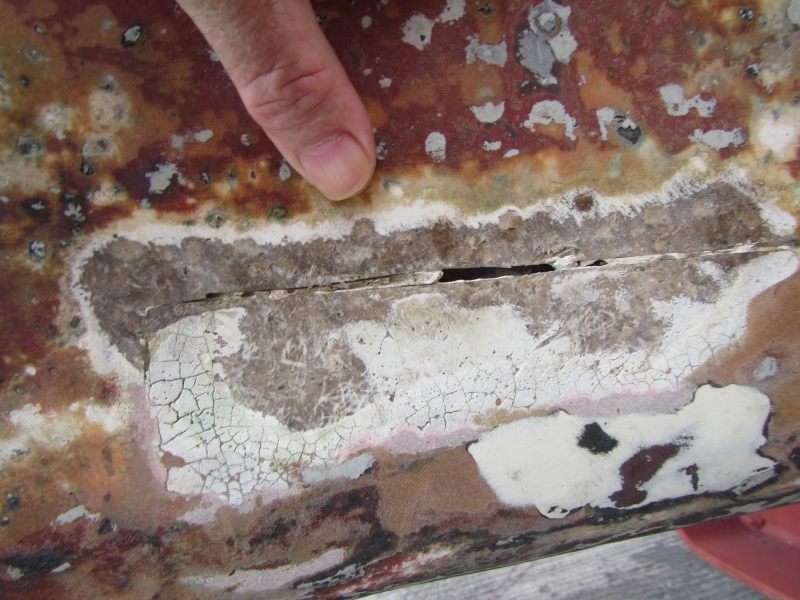
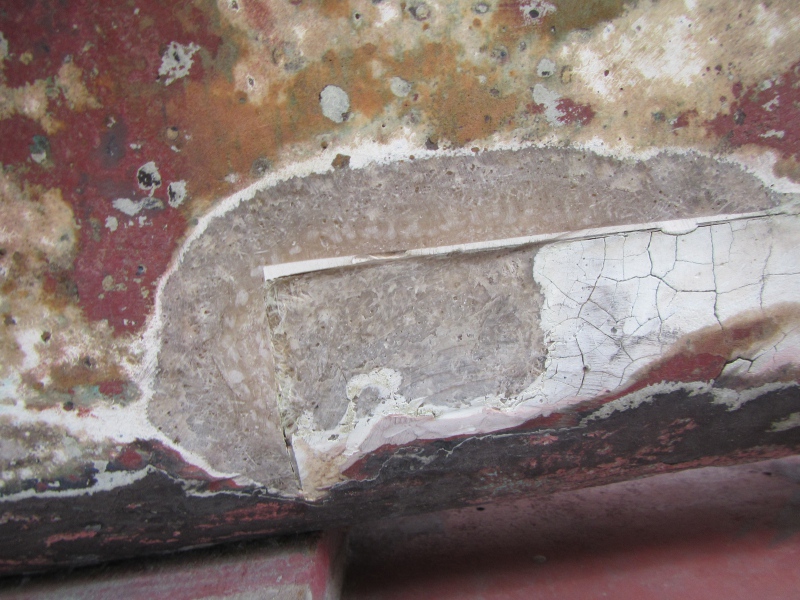
                Close inspection of the sanded hull revealed small areas that had been filled in the past with some type of gray material.  Made the decision to have the hull sanded down further to bare fiberglass to determine what this was.  We hired another local Filipino yard worker to further sand the hull at 500 pesos a day for 12 more days.

                  With all the paint and gel coat removed exposing the bare fiberglass hull, it was readily observable that minor osmosis issues were present.

                    Speculated at sometime in the past, this hull had a osmosis repair performed based on the gray filler material that was still present at some locations.  Also assumed this osmosis treatment was performed without peeling the hull and with the gel coat and a few paint layers not removed - a localized based treatment.  Prior to the sanding the hull to remove the paint no blistering was observable. Also after exposing the bare fiberglass no blistering was found, so this osmosis was still in its very early developmental stages.  The following picture shows wet spots where a liquid is present in the very top layers of the hull fiberglass and is exiting through very small pin sized holes.  After researching this minor osmosis issue, internet advice was to thoroughly wash the hull with pressurized water each day, for up to two weeks, to help remove the liquid called solutes.  Then allow the hull to dry under normal outdoor conditions.  Next action recommended was to paint the hull with a few coats of epoxy resin, followed by application of a quality barrier coat paint.

                    Engine Seawater Intake

                    Engine Seawater Intake

                    • Action: To Do List item A0092 – Obtain and replace with 1 1/2 inch size engine seawater intake thru hull, seacock, clamps, and hose.
                    • Action: To Do List item A0093 – Increase intake plumbing size to 1 1/2 inch and add engine seawater intake external hinged lid strainer.
                    • Completed: 16 April 2017
                    • Cost: $774.45


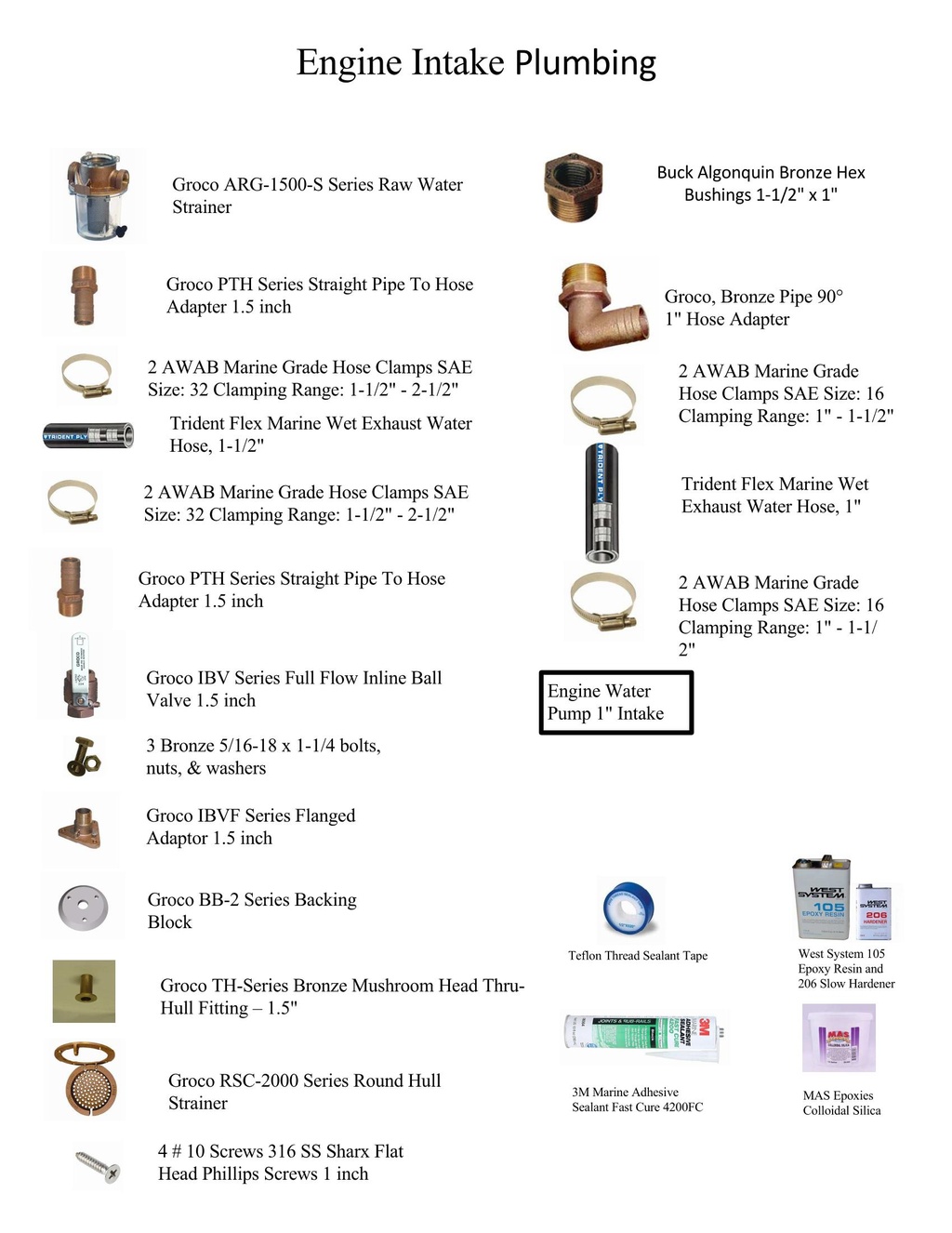
                    A pictorial diagram depicting the complete system was created to identify and illustrated the parts and material needed.

                    The following items were ordered and received by ocean freight shipment.


                    P/N Item Q Each Total
                    RSC-2000 Groco RSC Series Round Hull Strainer 1 $56.69 $56.69
                    TH-1500-L Groco TH-Series Bronze Mushroom Head Thru-Hull Fitting 1-1/2" Thread Size 1 $35.99 $35.99
                    BB-2 Groco BB-Series Backing Block 1 $43.84 $43.84
                    IBVF-1500 Groco IBVF Series Flanged Adapter 1 $44.99 $44.99
                    IBV-1500 Groco IBV Series Full Flow Inline Ball Valve 1 $69.29 $69.29
                    PTH-1500 Groco PTH Series Pipe To Hose Adapter 2 $16.19 $32.38
                    ARG-1500-S Groco ARG-S Series Raw Water Strainer 1 $251.99 $251.99
                    114150100 Buck Algonquin Bronze Hex Bushings 1-1/2" x 1" 1 $15.99 $15.99
                    00103100 Buck Algonquin - Plumbing Fittings Bronze Street Elbows - 90 Degrees - 1inch 1 $20.99 $20.99
                    100-100 Trident Engine Intake Water & Heater Hose - 1 Inch 2 $7.19 $14.38
                    134-112 Trident Heavy Duty Engine Intake Water & Heater Hose - 1-1/2 Inches 2 $7.19 $14.38
                    316064 AWAB Marine Grade Hose Clamps SAE Size: 32 Clamping Range: 1-1/2" - 2-1/2" 4 $3.14 $12.56
                    316038 AWAB Marine Grade Hose Clamps SAE Size: 16 Clamping Range: 1" - 1-1/2" 4 $2.69 $10.76
                    B001376AYY Bronze Hex Bolt, Plain Finish, Hex Head, External Hex Drive, Meets ASME B18.2.1, 1" Length, Fully Threaded, 5/16"-18 UNC Threads (Pack of 5) 3 $1.70 $5.10
                    B00DHV9NGG Bronze Flat Washer, Plain Finish, 5/16" Hole Size, 0.34" ID, 7/8" OD, 0.065" Nominal Thickness (Pack of 25) 6 $0.73 $4.38
                    21124 3M, Marine Adhesive / Sealant Fast Cure 4200 1 $22.15 $22.15
                    S520 Teflon Thread Sealant Tape 1 $2.69 $2.69
                    105-B West System 105 Epoxy Resin - Gallon 1 $73.59 $73.59
                    206-B West System 206 Slow Hardener - 27.5 Ounces 1 $42.31 $42.31
                    $774.45


                    Internal access to the engine seawater intake thru hull, seacock, and strainer were through two access floor hatches.  Removed hoses and corroded clamps, Groco 1 inch strainer, and was able to remove the plastic seacock.  Removed the exterior screws from the fixed strainer thru hull and its internal bronze nut.  It was extremely difficult to remove this bronze strainer thru hull, but persistent whacks from a sledge hammer eventually succeeded.

                    The new Groco 1.5 inch strainer was mounted to two wood supports that attach with bolts to the wood floor support beams.  The access floor panel had engine sound insulation material that was trimmed to fit the top of the Groco strainer. A Trident 1 inch hose was connected between the Groco strainer and engine seawater pump and double clamped on each end.

                    The initial fit check of the thru hull and strainer identified the need to fair the area to get a good fit.

                    Laid in some fiberglass cloth and built the area up using epoxy mixed with colloidal silica.  After many attempts, the thru hull and strainer could be mounted to a flat surface.

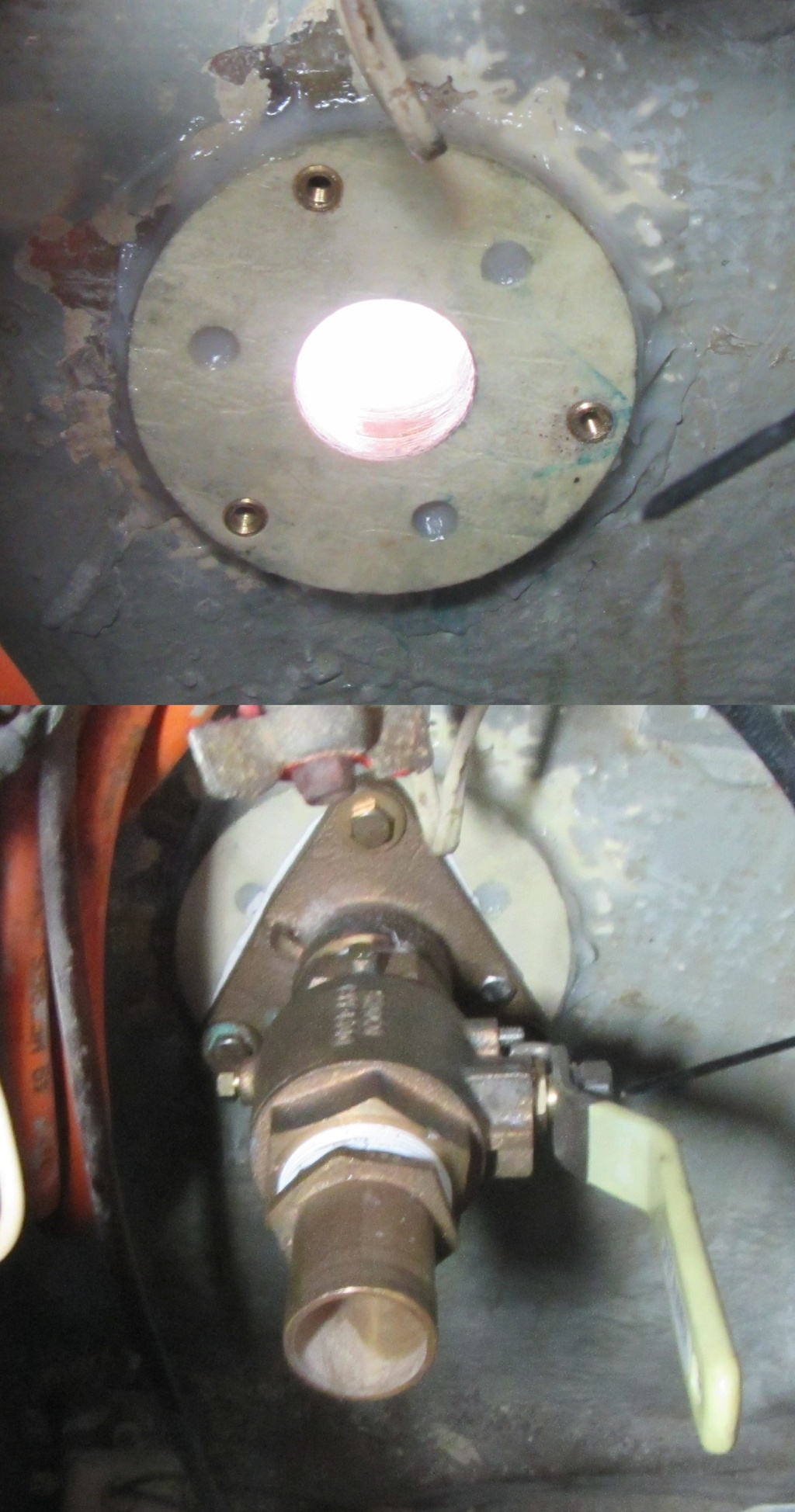
                    A blacking block was epoxied on the interior side of the hull and the thru hull mount flange, seacock, and hose adapter all dry fitted ok.

                    The surface was painted with two coats of Interlux InterProtect HS Epoxy Primer (YPA422 / YPA420) and allowed to cure dry.  Final installation was sealed with 3M 4200 Marine Adhesive sealant.

                    A section of Trident 1.5 inch hose was installed with double clamps on each end between the hose bard attached to the seacock to the other hose barb attached to the Groco strainer.


                    Forward Hull Transducer Thru Hulls

                    Forward Hull Transducer Thru Hulls

                    • Action: To Do List item A0088 – Remove forward speed transducer thru hull and close out hole.
                    • Action: To Do List item A0089 – Remove aft speed transducer thru hull and close out hole.
                    • Action: To Do List item A0090 – Remove and delete depth transducer.
                    • Action: To Do List item A0091 – Install a Raymarine/Airmar retractable DST800 Smart Triducer Multisensor.
                    • Completed: 16 April 2017
                    • Cost: $355.99


                    The forward and aft speed transducer thru hulls were removed using a chisel to cut the plastic material they were made of.  The white plastic material of the forward transducer thru hull literally shattered like glass when struck by the chisel and hammer - definitely not marine rated or approved material.  Both forward and aft speed transducer thru hulls came out relatively easy using the chisel and hammer.

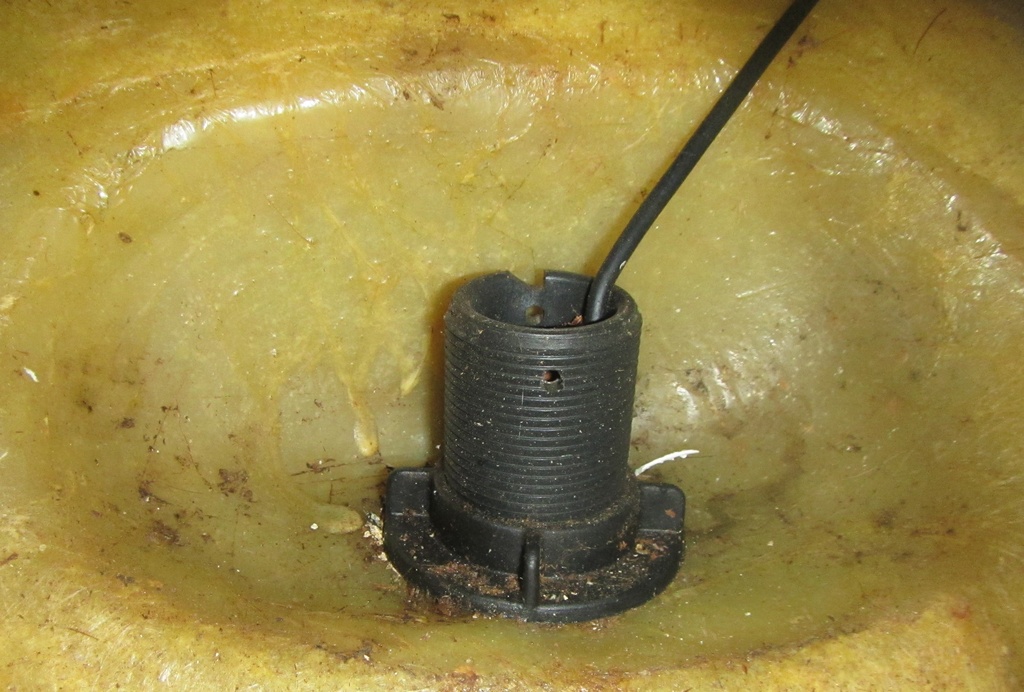
                    Removed the internal plastic nut from the depth transducer sensor, cut the wire, and used a hammer to easily knock it out of the hull.

                    The forward and aft speed transducer thru hull holes were flared out and sanded, a flat piece of fiberglass cloth laid in on the interior side, then multiple layers of increasing size fiberglass cloth were epoxied on the exterior to close out the holes.  Finished the inside and outside surfaces with epoxy thicken with colloidal silica to ease the surface sanding. The outside surface was sanded smooth to the same contour of the hull.  Miscellaneous material, epoxy, fiberglass cloth and sanding paper cost approximately $30.00.

                    Ordered and received a retractable, Raymarine/Airmar DST800 Thru-Hull Smart Triducer that provides depth, speed, and temperature in a single thru-hull fitting - cost $300.99.  This decision to use this sensor also resulted in the decision to upgrade the entire navigational electronic system.

                    The existing depth sensor hole and surrounding area was sanded and then painted with two coats of Interlux InterProtect HS Epoxy Primer (YPA422 / YPA420) applied to the exterior and interior surfaces and allowed to cure dry.  The new sensor thru hull housing was reinstalled again, dry-fitted, to verify fit and alignment, before final installation with the application of 3M 4200 Marine Adhesive sealant.  Miscellaneous material cost for this installation was approximately $25.00.