
- Action: To Do List item A0057 – Remove all bottom paint.
- Completed: 21 April 2017.
- Cost: $302.58.
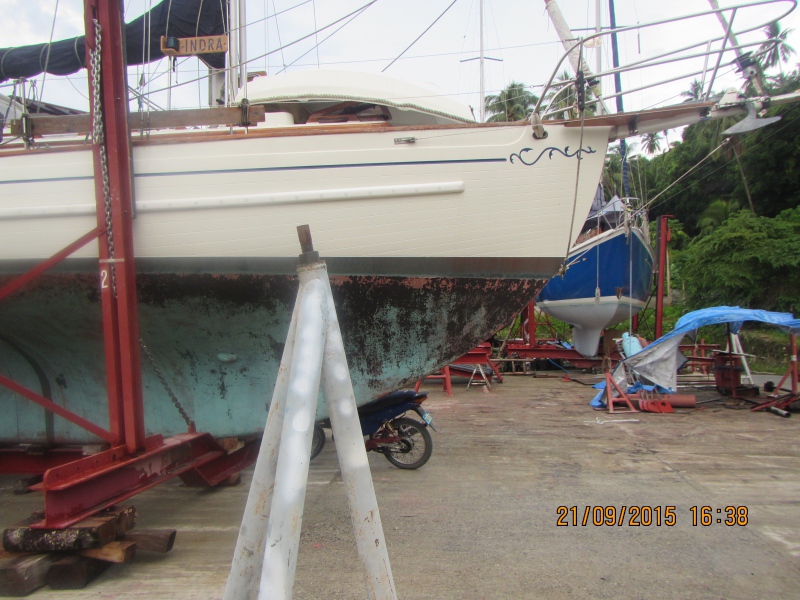
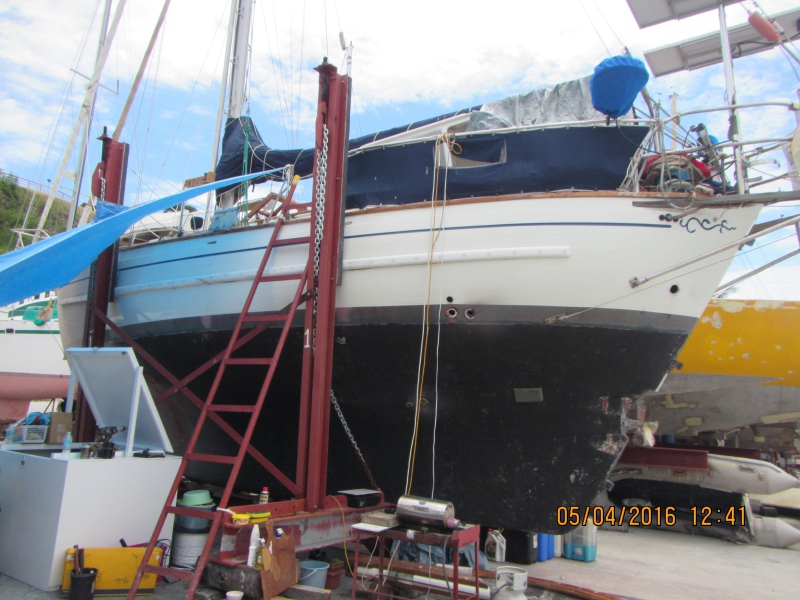
The reason to remove the bottom paint was the ablative anti-foul bottom paint was flaking and falling off - also the barrier coat quality was extremely questionably. We had previously ordered a Warner Tools 690 Big 4-Inch Blade Scraper ($11.59) and replacement blades ($24.38). The first step was to scrape the entire hull to be followed by first sanding with 36 grit; with final sanding at 80 grit. We hired one local Filipino worker, recommended by a cruiser in the yard, for two weeks at P600 pesos ($12.50) per day to assist.
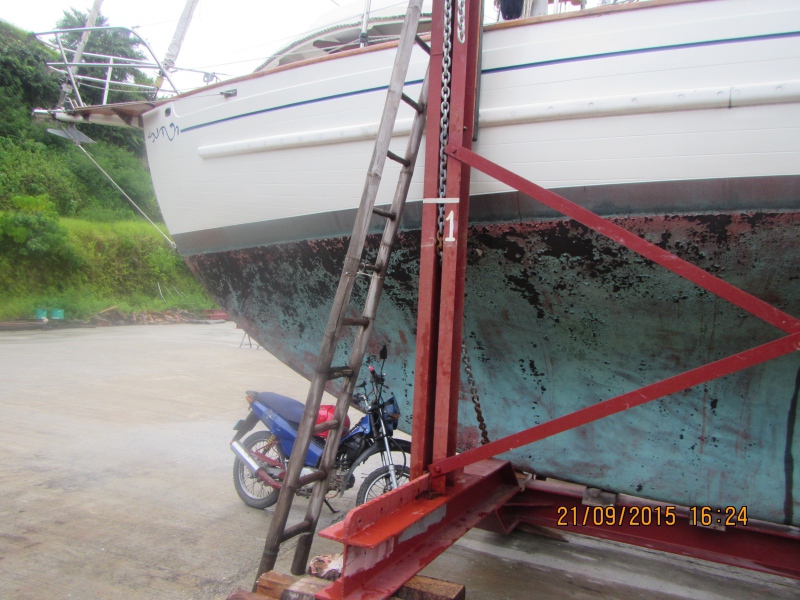
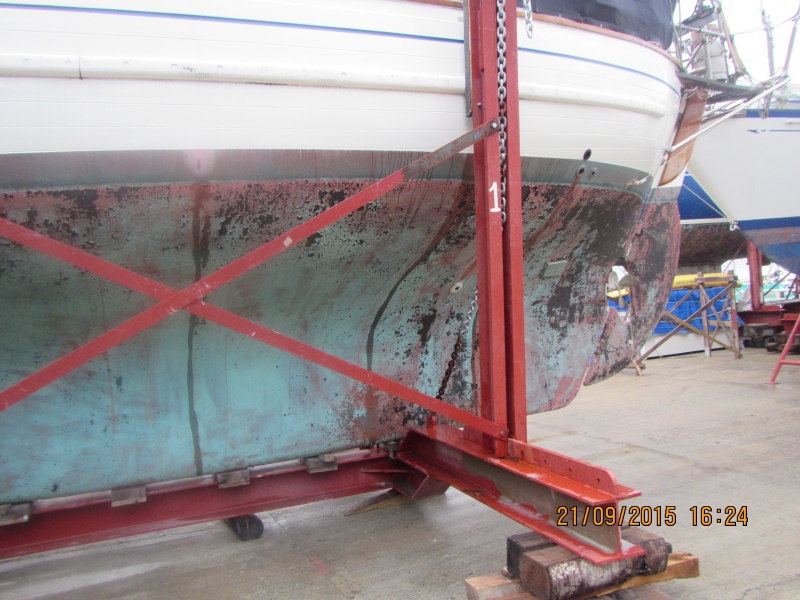
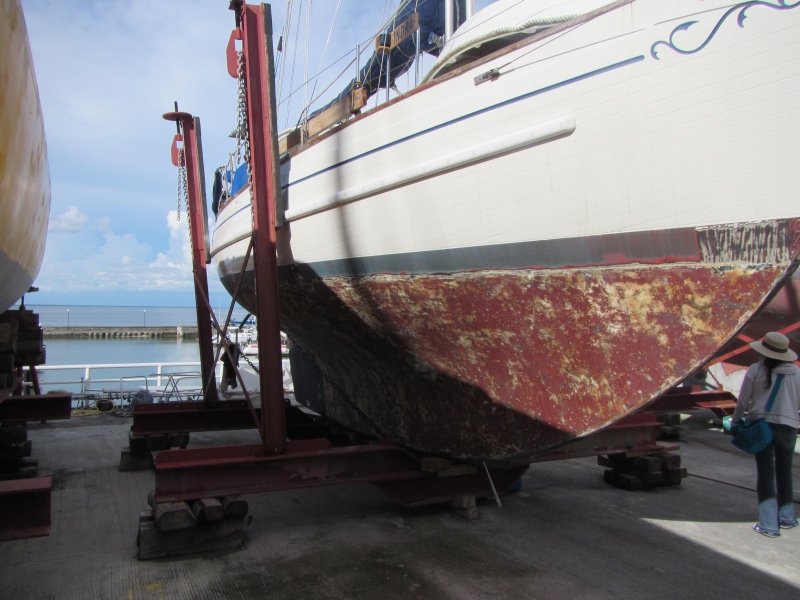
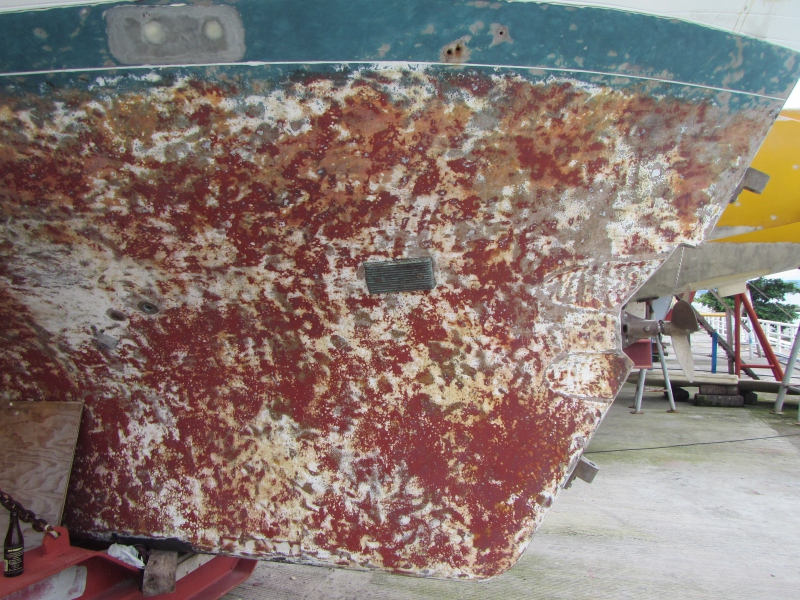
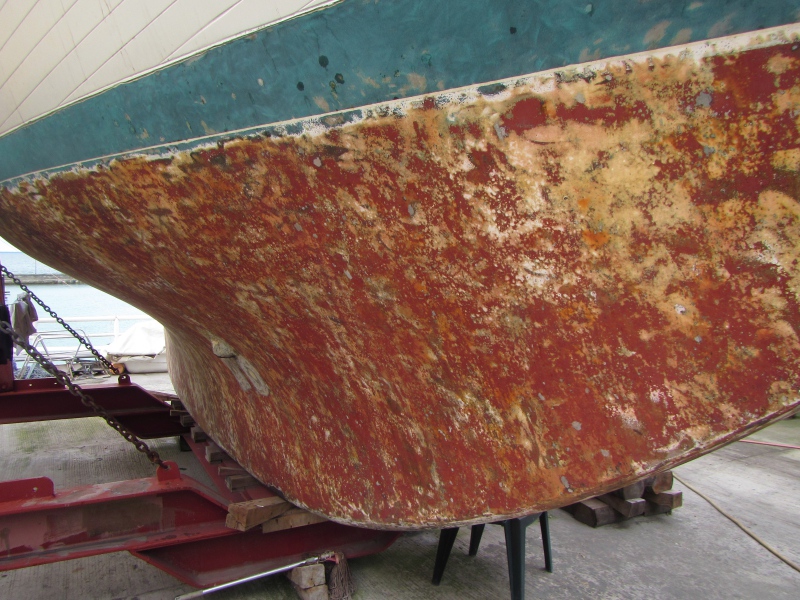
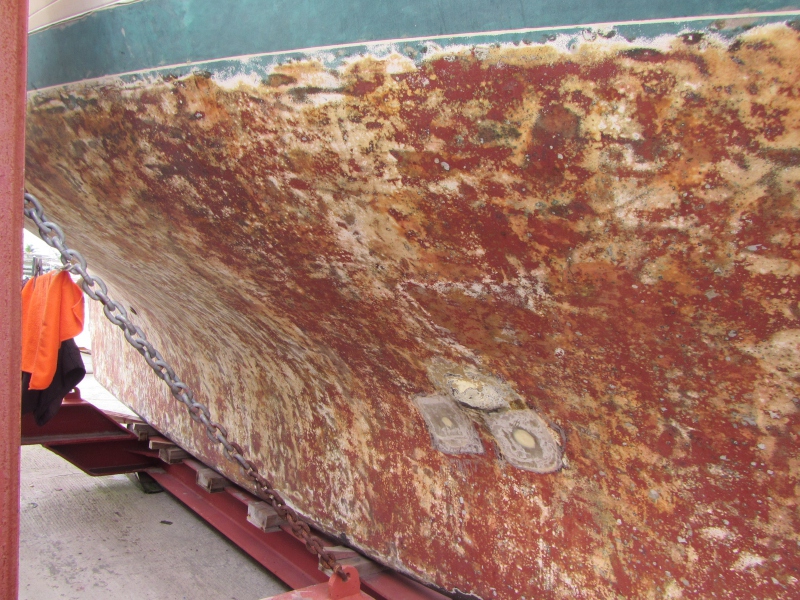
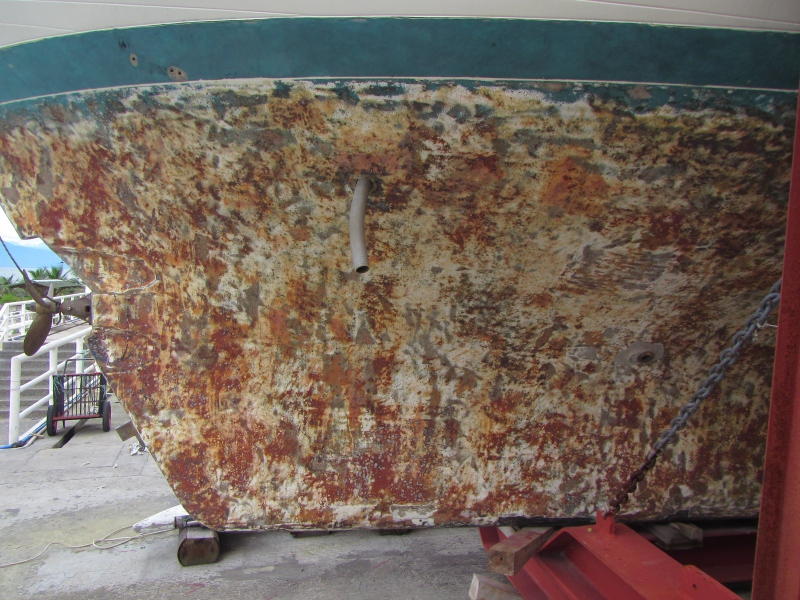
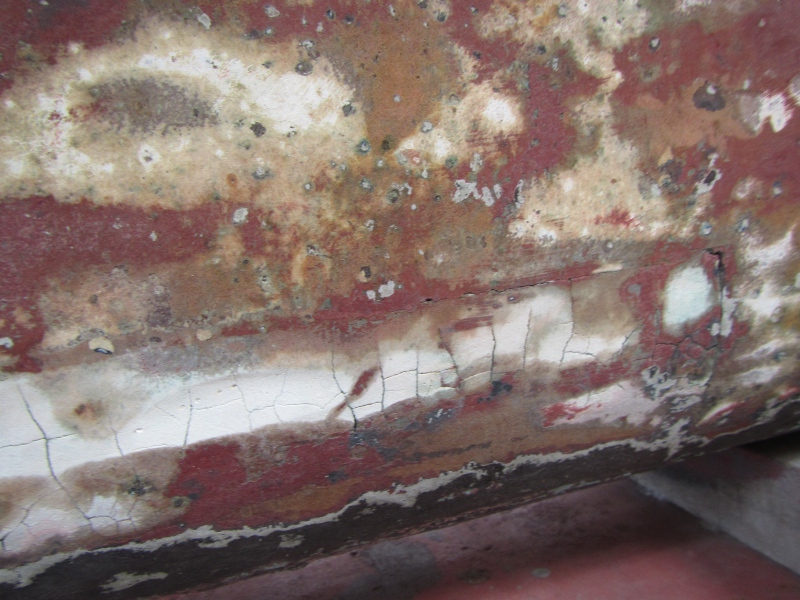
The following pictures illustrate the initial paint state/status after just five days on the hard, drying out.
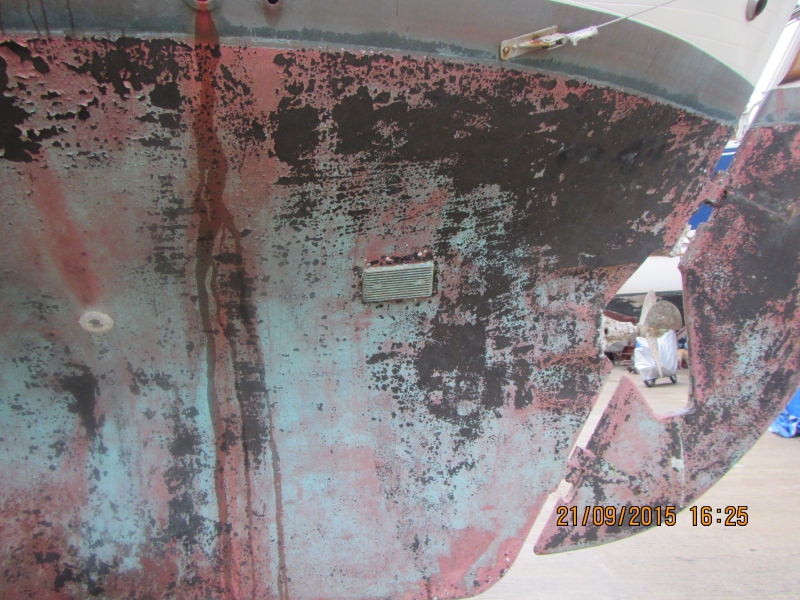
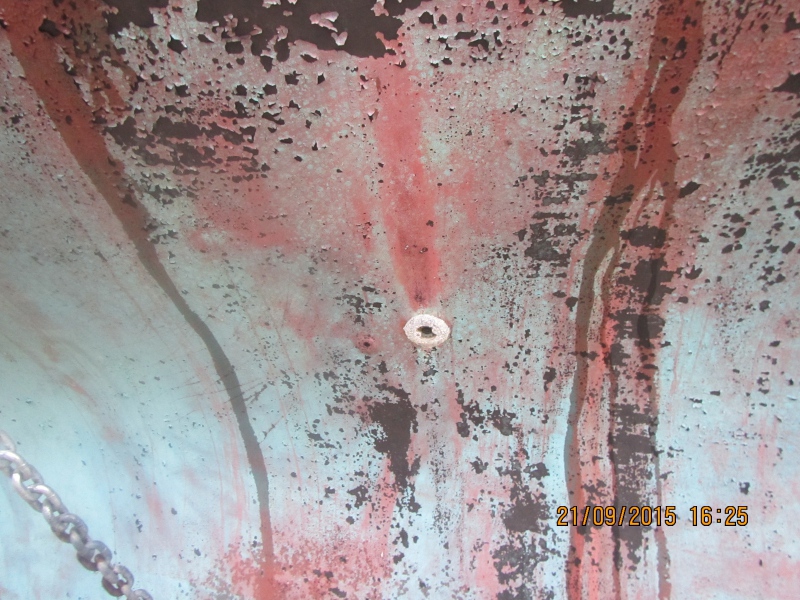
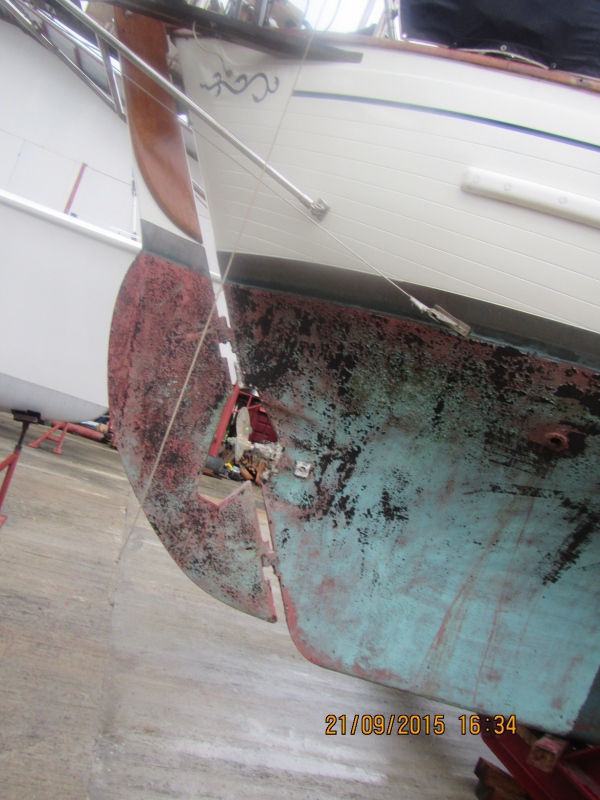
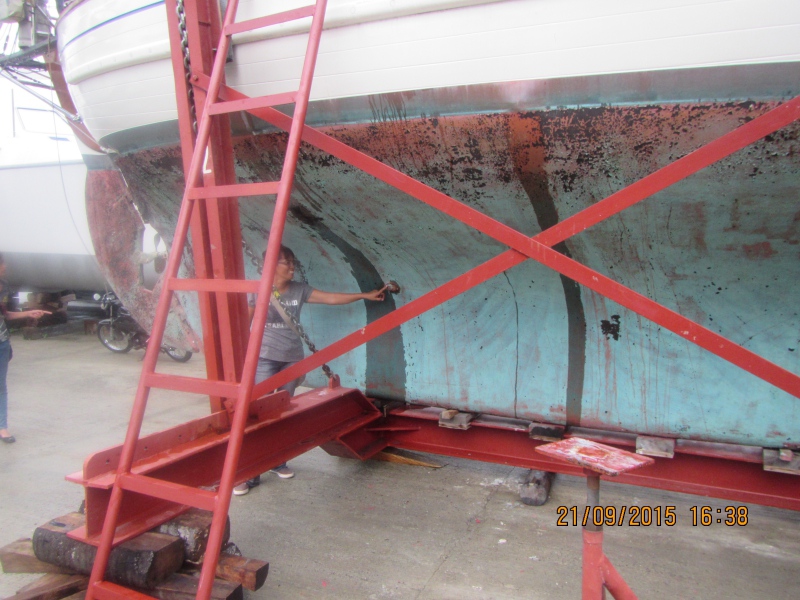
The paint scraper was used first to remove as much loose paint as possible resulting in only the black barrier paint requiring sanding to be removed. Next 36 grit sandpaper was used to remove the barrier coat and other layers of paint discovered underneath. Our guess was there were possibly seven different layers and types of paint including the black barrier coat that needed to be removed by sanding. The boot stripe was also sanded down. After two weeks about 60% of the bottom was sanded with 36 grit and work stopped as we returned to Naga City, Cebu. Due to the unexpected absences of our local worker only 11 days were paid at cost of P6,600 ($137.50) and P550 ($11.46) for locally acquired 36 grit sandpaper and Rugby glue.
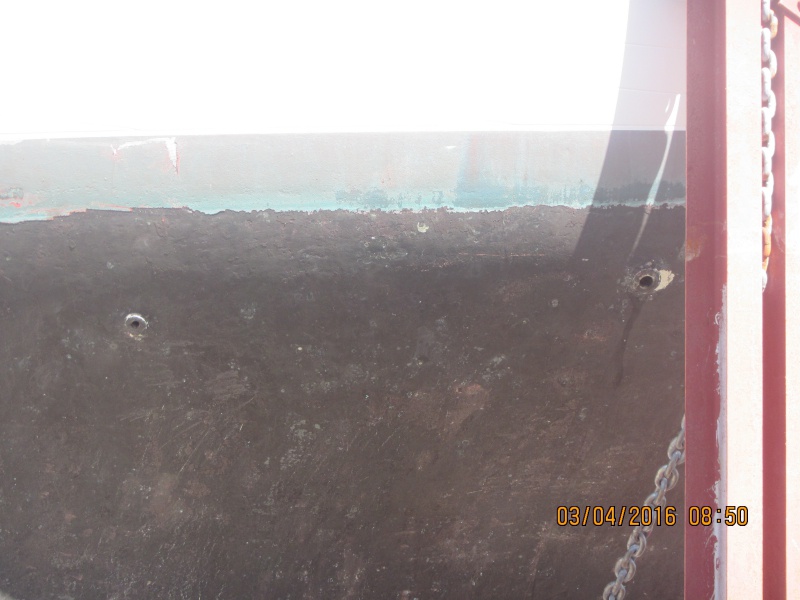
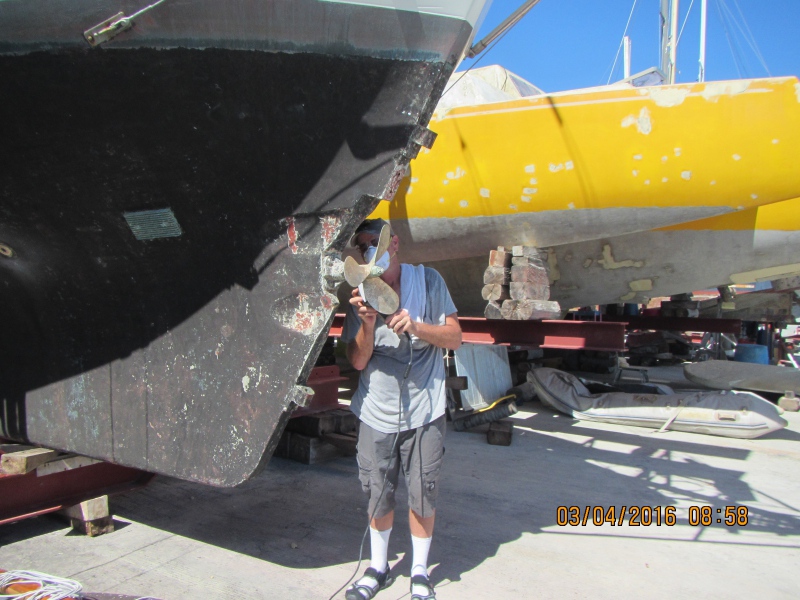
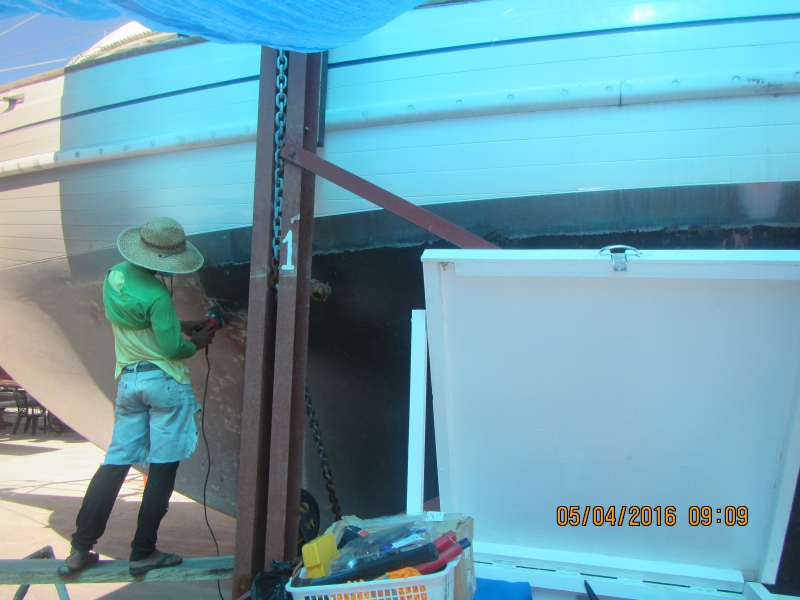
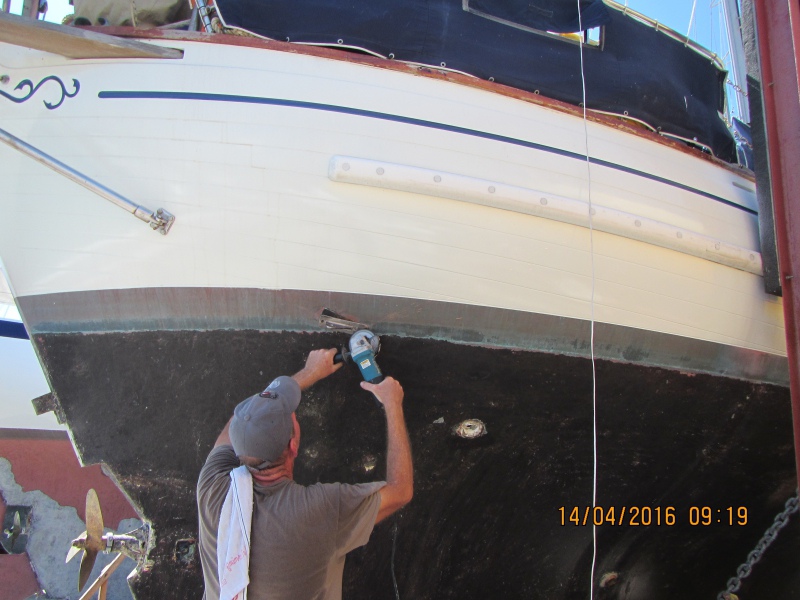
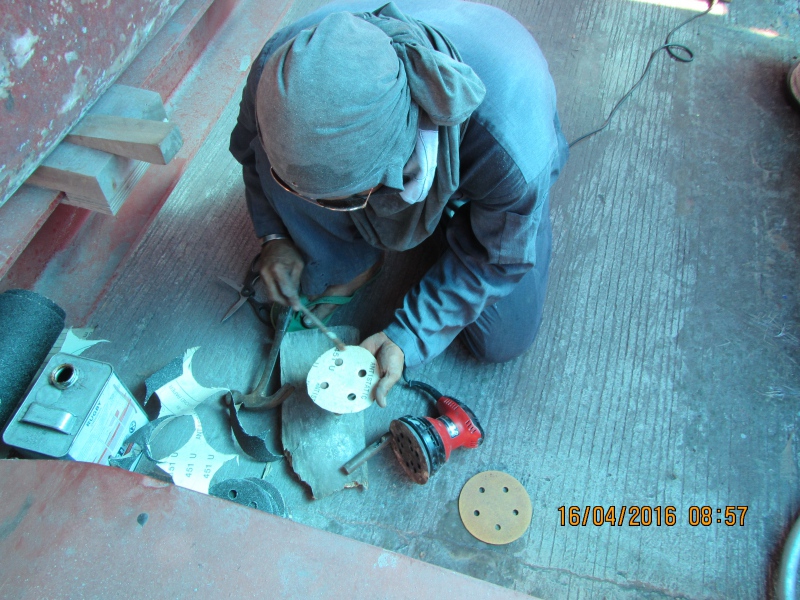
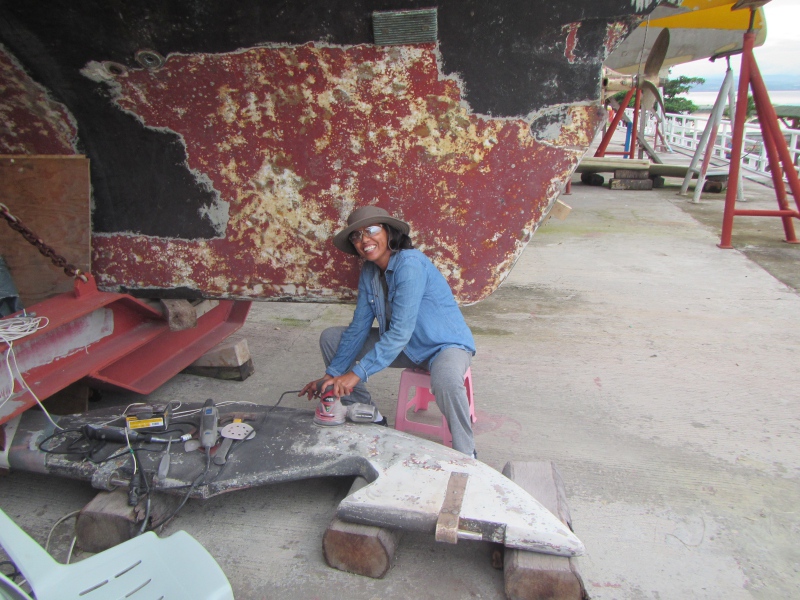
When we returned, we hired another local Filipino yard worker who's positive work ethic we had previously observed, at a rate of P500 ($10.20) per day. His task was to complete the removal of the barrier coat with 36 grit sandpaper and then sand the entire bottom again with 80 grit. We trusted this worker enough to continue work in our absence to complete the 80 grit sanding of the hull, which he finished 14 November 2016. The cost of his labor totaled P3,750 pesos ($76.53) and materials P2,015 pesos ($41.12).
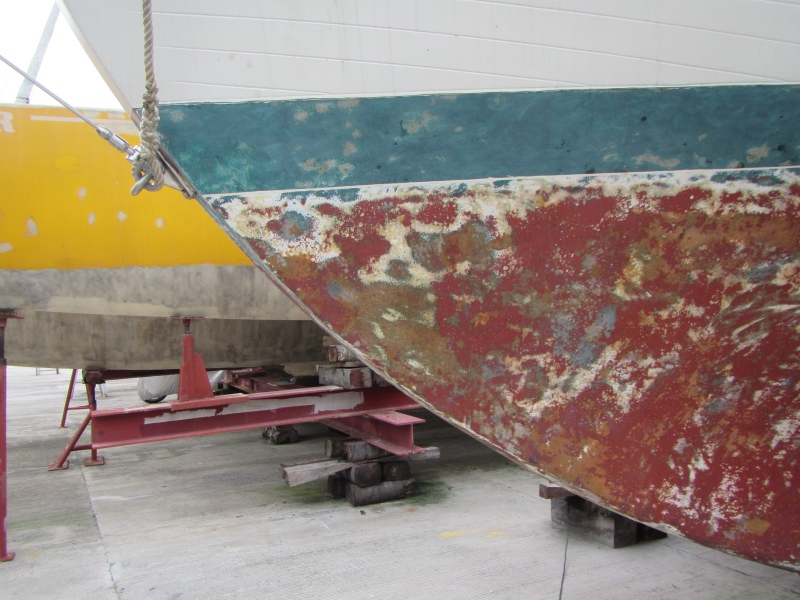
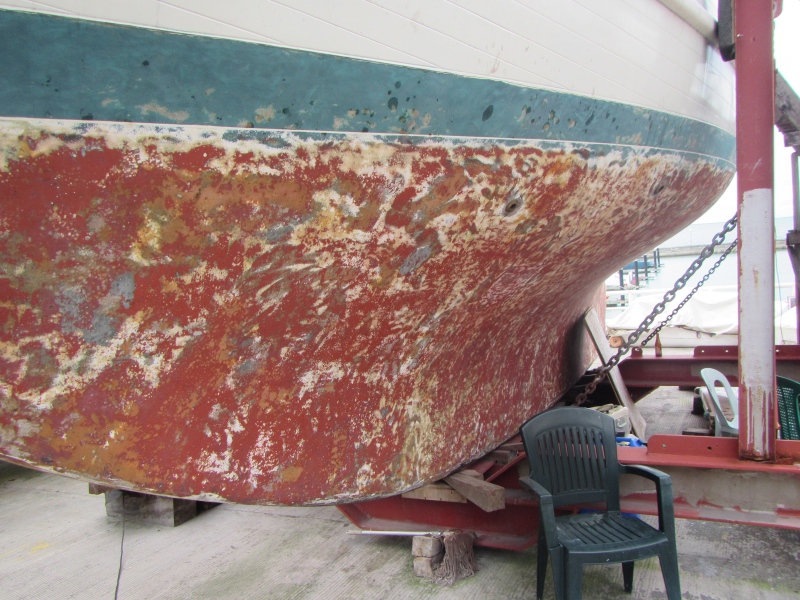
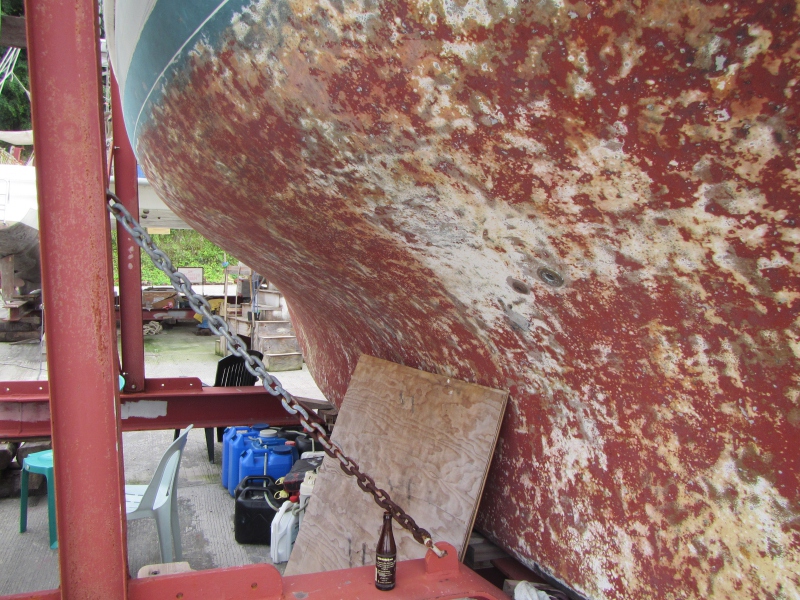
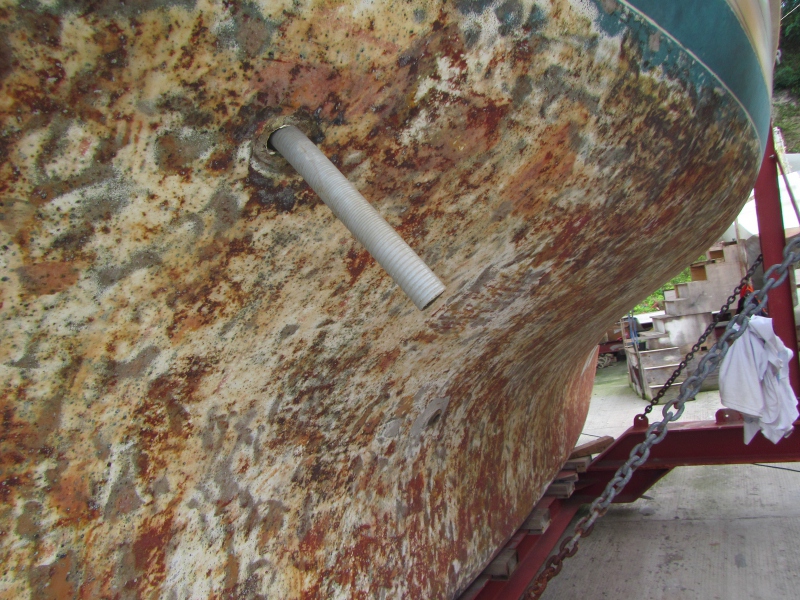
At the base of the keel, the three areas missing sections of paint, were clearly visible. The loss of paint was caused by previously applied filler material that was cracking, separating, and falling off. These sections would be ground out and refilled.
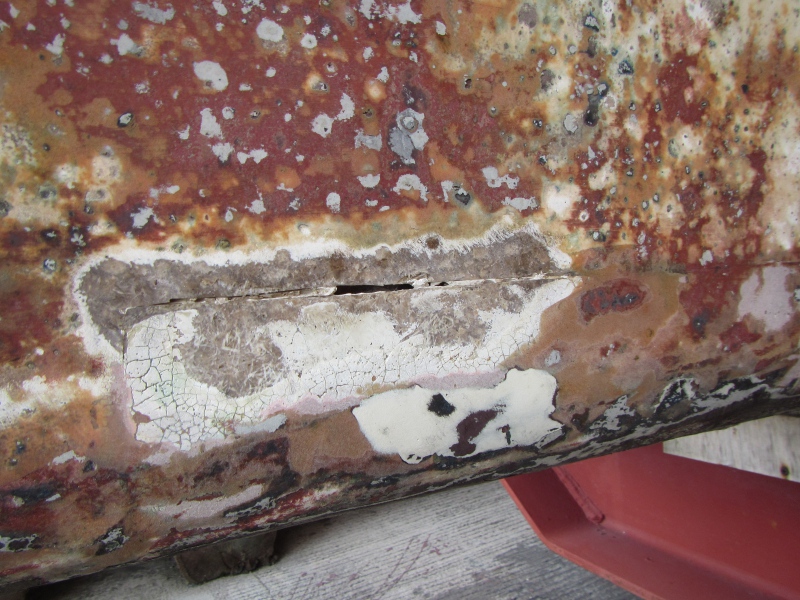
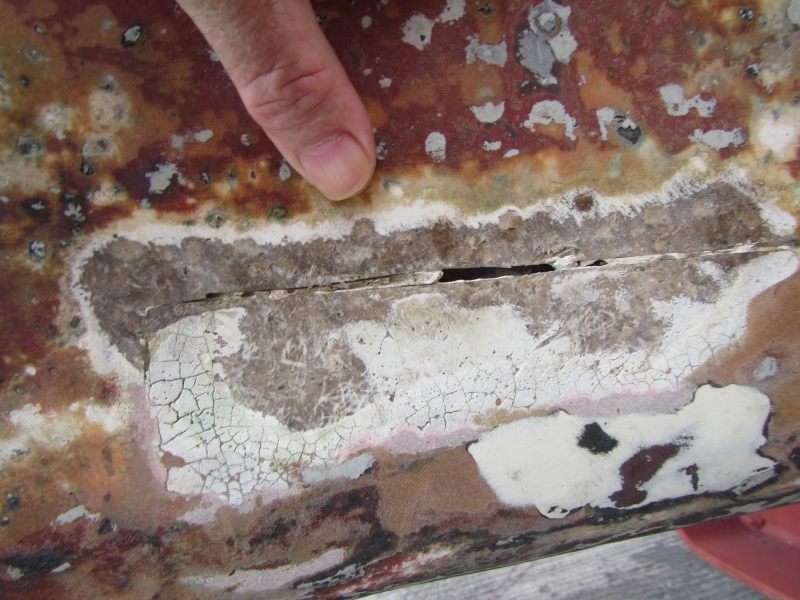
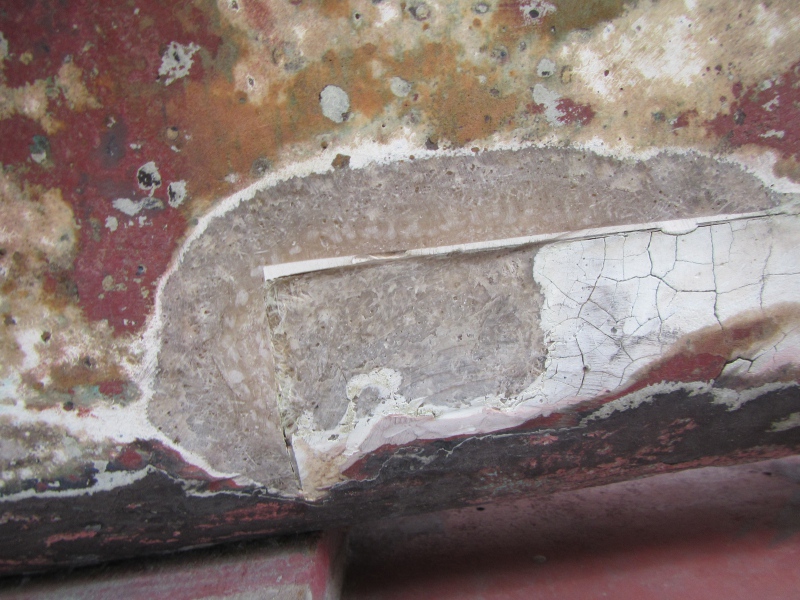
Close inspection of the sanded hull revealed small areas that had been filled in the past with some type of gray material. Made the decision to have the hull sanded down further to bare fiberglass to determine what this was. We hired another local Filipino yard worker to further sand the hull at 500 pesos a day for 12 more days.

With all the paint and gel coat removed exposing the bare fiberglass hull, it was readily observable that minor osmosis issues were present.

Speculated at sometime in the past, this hull had a osmosis repair performed based on the gray filler material that was still present at some locations. Also assumed this osmosis treatment was performed without peeling the hull and with the gel coat and a few paint layers not removed - a localized based treatment. Prior to the sanding the hull to remove the paint no blistering was observable. Also after exposing the bare fiberglass no blistering was found, so this osmosis was still in its very early developmental stages. The following picture shows wet spots where a liquid is present in the very top layers of the hull fiberglass and is exiting through very small pin sized holes. After researching this minor osmosis issue, internet advice was to thoroughly wash the hull with pressurized water each day, for up to two weeks, to help remove the liquid called solutes. Then allow the hull to dry under normal outdoor conditions. Next action recommended was to paint the hull with a few coats of epoxy resin, followed by application of a quality barrier coat paint.